Comparison
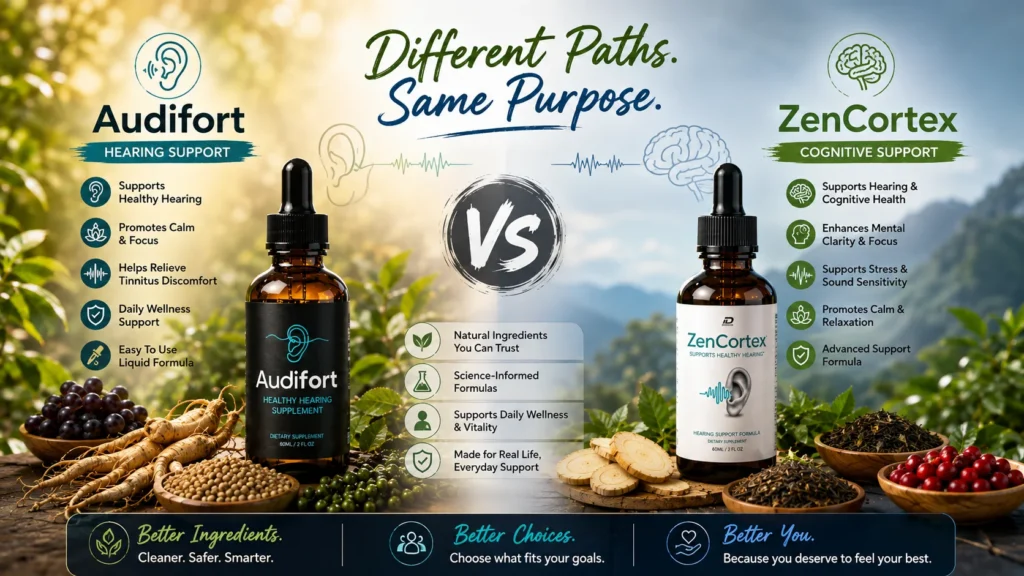
Audifort vs ZenCortex: Two Not Recommended Hearing Supplements, Explained
Audifort and ZenCortex both sit in our Brain & Focus category, and both are the only two products on this site to land a Not Recommended verdict. That's not a coincidence: both are judged against the same clinical guideline, and neither clears it. This page explains why, and what the honest, evidence-based next step actually looks like.
Disclosure: DigiproSpark may earn a commission if you buy through links on this page, at no extra cost to you. It does not affect our evaluation. Educational content only; not medical advice. See our affiliate disclosure and medical disclaimer.
Watch
Video Walkthrough
Comparison
Audifort vs ZenCortex: side by side
Why both fail the same clinical bar
The American Academy of Otolaryngology–Head and Neck Surgery's clinical practice guideline on tinnitus explicitly states that clinicians should not recommend dietary supplements to patients for the primary treatment of tinnitus, citing insufficient evidence that any supplement reliably reduces symptoms. This isn't a generic "more research needed" caveat: it's a specific, published clinical recommendation against the entire product category both Audifort and ZenCortex sit in. See our full breakdown of the AAO-HNS guideline for the complete context, including which evidence-based alternatives the guideline does support (sound therapy, cognitive behavioral therapy, hearing aids).
Where they differ: ZenCortex's specific added problems
Both products are confirmed oral liquids, taken by mouth, per their current official sales pages, an earlier version of this comparison described ZenCortex's usage instructions as an unresolved oral-vs-ear-drop conflict based on third-party listings, checking the actual official sales page directly resolves it. Both products' "non-stimulant"/general-safety marketing also held up against their current official sales pages, an earlier version of this comparison flagged ZenCortex's disclosed guarana as contradicting a non-stimulant claim, we could not confirm guarana anywhere on the current official page and have removed that finding. Audifort's own evidence gap centers on a specific, still-standing issue: its GABA ingredient's ability to cross the blood-brain barrier orally is scientifically disputed, undercutting its stated "calms the auditory cortex" mechanism. ZenCortex's own standing gap is its marketing of Gymnema Sylvestre as supporting hearing, when its real evidence base is blood-sugar regulation.
What to do instead
If you're dealing with tinnitus or a hearing change, the evidence-based first step is a doctor or audiologist, not either of these products. The AAO-HNS guideline itself points to sound therapy, cognitive behavioral therapy, and hearing aids as the interventions with real supporting evidence. We're not aware of a hearing/tinnitus supplement on the market today that clears this bar, which is why both products we've reviewed in this category land Not Recommended, an honest, if disappointing, answer.
Full detail in our Audifort review and ZenCortex review, including each product's complete Trust Score breakdown.
Enjoying our content? Add us as a preferred source on Google.
Add us as a preferred source on GoogleDisclosures
Medical disclaimer
This content is for educational purposes only and is not medical advice. It has not been evaluated by the FDA and is not intended to diagnose, treat, cure or prevent any disease. Consult a qualified healthcare professional before starting any supplement.
Who wrote this
We are not doctors. We are independent researchers who spend dozens of hours analyzing peer-reviewed clinical trials so you don't have to. Every claim on this page is scored against our 5-Point Quality Filter and linked to its source.
Affiliate disclosure
DigiproSpark may earn a commission from purchases made through affiliate links on this page at no extra cost to you. It does not change our editorial opinions.

About the author
Satwasheel Gharde
Founder & Head of Research, DigiproSpark
Founder of Smiley Social and Head of Research at DigiproSpark. Personally researches and edits every supplement review here using the 5-Point Quality Filter: transcribing the printed Supplement Facts label, sourcing peer-reviewed human evidence (PubMed / PMC / NIH), and checking clinical dosing before any verdict. Our reviews are evidence-and-label analyses, not medical advice; material safety points (drug interactions, contraindications) are written conservatively and flagged for a qualified clinician or pharmacist to confirm. Conflict-of-interest: pages may contain affiliate links that can earn a commission, which never changes a rating. Corrections & editorial contact: smileysocial@digiprospark.com.
Author of 17 published product reviews on DigiproSpark, each researched under the 5-Point Quality Filter. See the methodology →
Last updated: August 2, 2026