Weight Management
Weight Loss Supplements for Women Over 40: What the Evidence Actually Supports
What actually changes with weight management after 40, what the research supports, and where a supplement honestly fits: with real Trust Score verdicts, not a generic best-of list.
Disclosure: DigiproSpark may earn a commission if you buy through links on this page, at no extra cost to you. It does not affect our evaluation. Educational content only; not medical advice. See our affiliate disclosure and medical disclaimer.
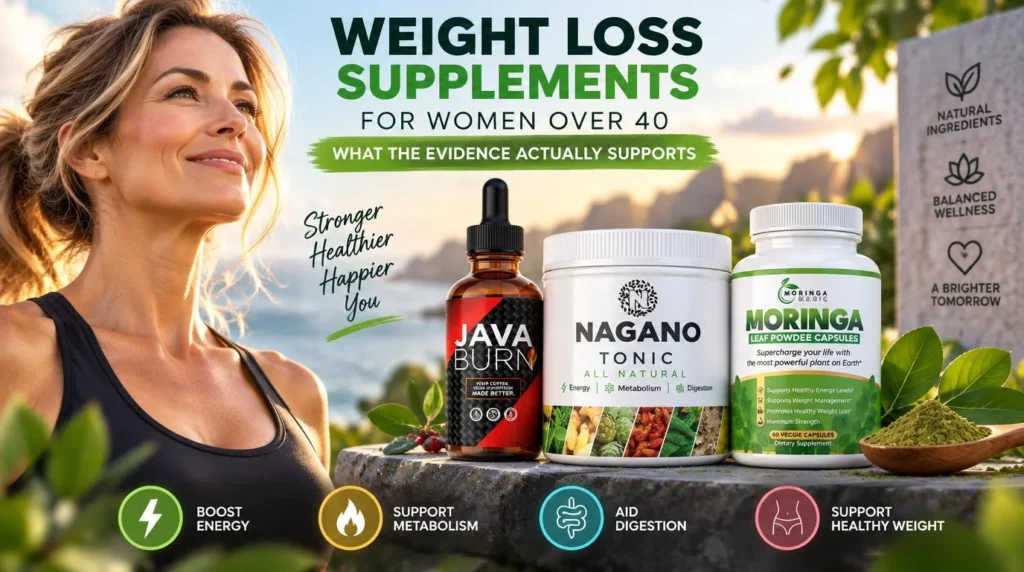
If you’re a woman over 40 researching weight-loss supplements, here’s what the evidence actually supports before you spend money on one. Weight management does tend to get harder in this decade, but the reasons are more specific than a generic ‘slowing metabolism’: and understanding them changes what actually helps.
What changes after 40
Three real, well-documented shifts drive most of the difficulty:
- Perimenopause and estrogen decline. Falling estrogen changes where the body stores fat, shifting it toward the abdomen, and affects appetite regulation. This is a real hormonal effect, not a motivation problem.
- Muscle loss (sarcopenia). Adults lose roughly 3-8% of muscle mass per decade after 30 without resistance training. Less muscle means fewer calories burned at rest, and the decline accelerates around menopause.
- Sleep and stress. Perimenopausal sleep disruption and chronic stress both raise cortisol and disrupt the hunger hormones ghrelin and leptin, making appetite harder to regulate.
What the evidence actually supports
Before any supplement, four things reliably move the needle, and every major clinical guideline for midlife weight management leads with these:
- Resistance training: the single most reliable way to preserve the muscle that perimenopause and inactivity erode.
- Adequate protein: active women managing weight generally do better toward the higher end of recommended intake, since protein preserves muscle during a calorie deficit and increases satiety.
- Soluble fiber: real evidence links fiber intake to increased GLP-1 and PYY (satiety hormones) and reduced ghrelin (hunger hormone).
- Sleep and stress management: unglamorous, but they influence appetite and adherence more than most supplements ever will.
Where a supplement honestly fits
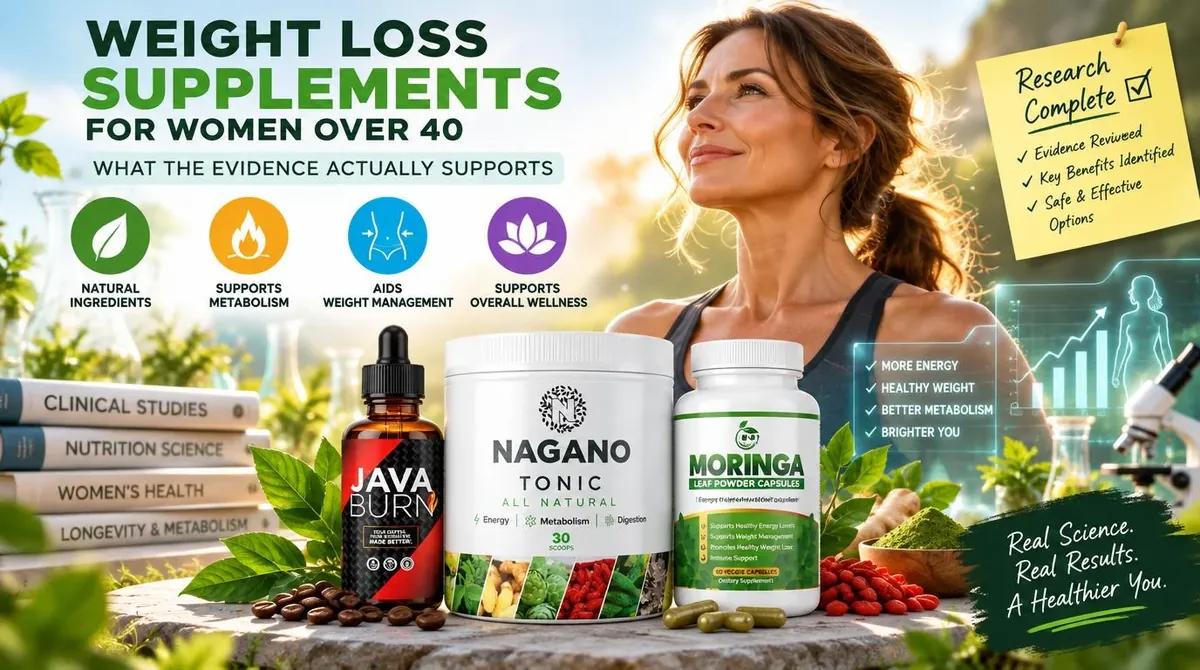
A supplement is, at best, a small add-on to the four levers above, never a replacement for them. Two categories are worth knowing about if you’re evaluating one:
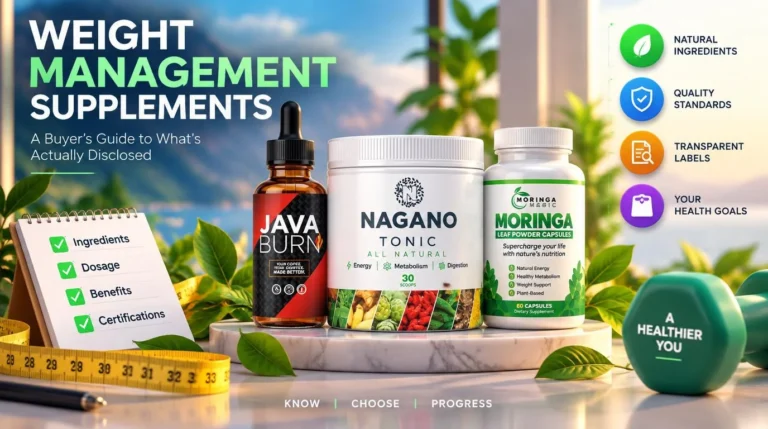
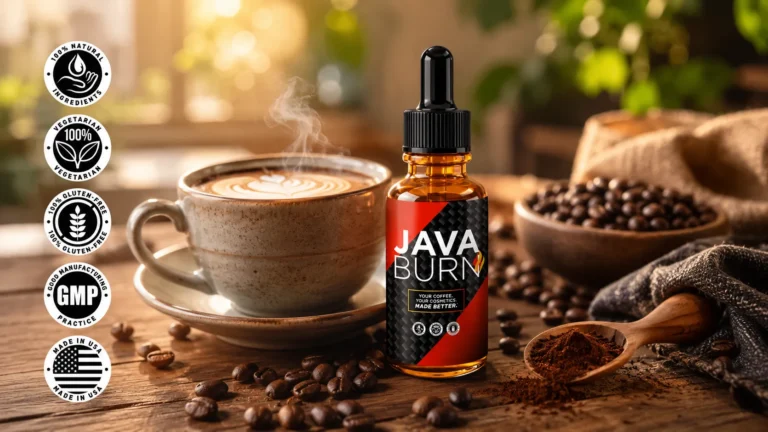
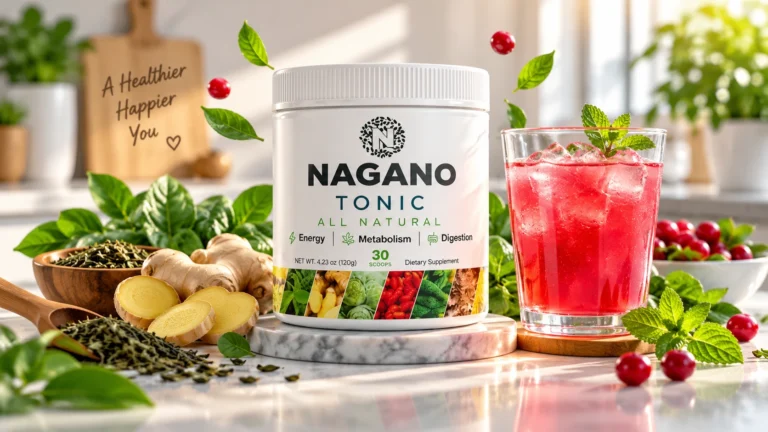
- Metabolism-support blends like Nagano Lean Body Tonic and Java Burn: both score a Conditional verdict on our 5-Point Quality Filter. Several of their named ingredients have real supporting research, but the doses sit inside undisclosed proprietary blends, so you can’t confirm you’re getting a studied amount.
- Blood-sugar-support formulas like Gluco6 and GlucoBerry, worth knowing about because insulin sensitivity tends to decline around perimenopause, which can make blood-sugar swings a bigger factor in appetite and weight than most weight-loss marketing acknowledges. Neither is a diabetes treatment, and both carry their own transparency caveats, read the full reviews before considering either.
We have not found a product in our current roster that clears the bar for an unqualified ‘Recommended’ verdict, and we say so plainly rather than inflate a score to make this page read better. See how we grade supplement evidence and why proprietary blends caveat a verdict.
Red flags worth knowing
- A proprietary blend that hides individual ingredient doses.
- Marketing built around a single before/after testimonial rather than published research.
- Claims of rapid, large weight loss with no diet or exercise change.
- No identifiable manufacturer, no third-party lab testing, or a guarantee with no real refund address.
Safety notes
None of the products discussed above are a substitute for medical care. Anyone on blood-pressure or blood-sugar medication, anyone pregnant or nursing, and anyone with a diagnosed thyroid or metabolic condition should talk to a clinician before adding a weight-management supplement: several common ingredients (caffeine, stimulant blends, certain herbal extracts) can interact with medication or existing conditions.
FAQ
Does metabolism really crash at 40?
No: large-scale research on human energy expenditure shows total daily calorie burn stays fairly stable from about age 20 to 60 once you adjust for body size and muscle. What changes is muscle mass, activity level, and hormones, not a metabolic ‘crash.’ See our related guide, how metabolism actually changes after 35.
Can a supplement replace diet and exercise for weight loss after 40?
No. Every product we’ve reviewed in this category is, at best, a modest add-on: never a replacement for resistance training, adequate protein, sleep, and an appropriate calorie balance.
Is it safe to combine a metabolism supplement with a blood-sugar supplement?
Don’t assume it is. Stacking supplements multiplies the chance of an ingredient interaction or an unintentional stimulant overlap. Check both labels against each other and confirm with a pharmacist or physician before combining anything.
This article is for information only and is not medical advice. Consult a qualified healthcare professional before starting any supplement, especially with a medical condition, medication, pregnancy or nursing.
References
- NAMS (The Menopause Society), menopause and weight, menopause.org
- NIA, sarcopenia and muscle loss with age, nia.nih.gov
- Pontzer H, et al. ‘Daily energy expenditure through the human life course.’ Science, 2021. DOI 10.1126/science.abe5017
Enjoying our content? Add us as a preferred source on Google.
Add us as a preferred source on GoogleDisclosures
Medical disclaimer
The statements on this page have not been evaluated by the Food and Drug Administration. This product is not intended to diagnose, treat, cure, or prevent any disease. Content is for educational and informational purposes only. Always consult a qualified healthcare professional before starting any new supplement.
Who wrote this
We are not doctors. We are independent researchers who spend dozens of hours analyzing peer-reviewed clinical trials so you don't have to. Every claim on this page is scored against our 5-Point Quality Filter and linked to its source.
Affiliate disclosure
DigiproSpark may earn a commission from purchases made through the affiliate links on this page at no additional cost to you. We only recommend products that pass our 5-Point Quality Filter. Our editorial opinions are not influenced by compensation.

About the author
Satwasheel Gharde
Founder & Head of Research, DigiproSpark
Founder of Smiley Social and Head of Research at DigiproSpark. Personally researches and edits every supplement review here using the 5-Point Quality Filter: transcribing the printed Supplement Facts label, sourcing peer-reviewed human evidence (PubMed / PMC / NIH), and checking clinical dosing before any verdict. Our reviews are evidence-and-label analyses, not medical advice; material safety points (drug interactions, contraindications) are written conservatively and flagged for a qualified clinician or pharmacist to confirm. Conflict-of-interest: pages may contain affiliate links that can earn a commission, which never changes a rating. Corrections & editorial contact: smileysocial@digiprospark.com.
Last updated: October 19, 2026