How-To Guides
How We Grade Supplement Evidence (A–U)
Our A–U evidence grading, how it separates ingredient research from product proof, and why most supplements land at Grade C (Conditional).
Disclosure: DigiproSpark may earn a commission if you buy through links on this page, at no extra cost to you. It does not affect our evaluation. Educational content only; not medical advice. See our affiliate disclosure and medical disclaimer.
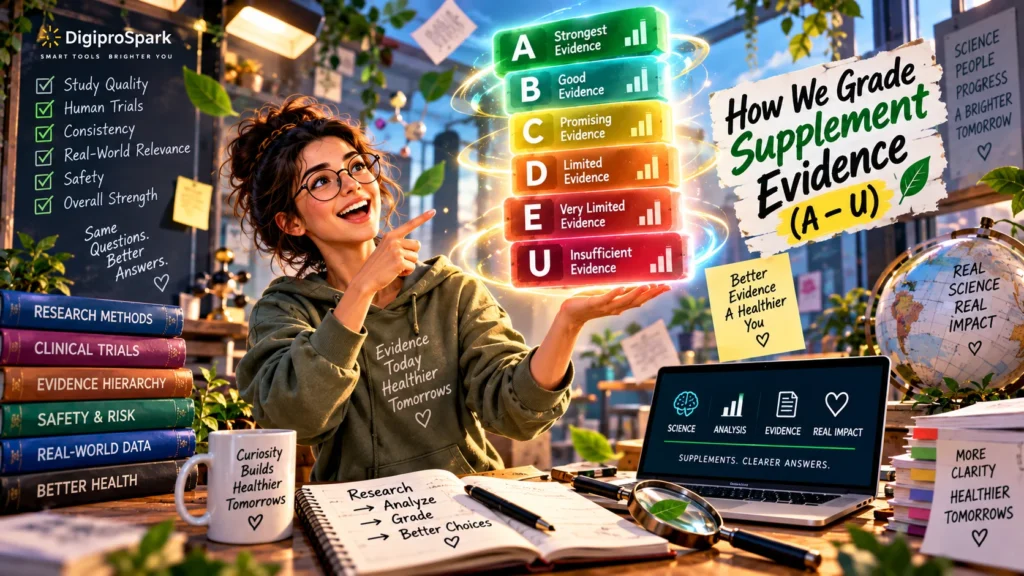
“Studies show…” is doing a lot of heavy lifting on most supplement pages. But a test-tube experiment and a large human trial are not the same evidence: and a study on an ingredient is not proof that a product containing it works. So every claim we make carries an explicit evidence grade. Here’s the scale, and why it matters.
Why a grading system
Two honesty problems plague supplement reviews: treating weak evidence as strong, and treating ingredient research as product proof. A visible A–U grade forces us, and lets you, to separate what an ingredient can do in general from what this specific product has been shown to do. It’s the same principle behind medical evidence hierarchies, adapted for supplements.
The A–U scale
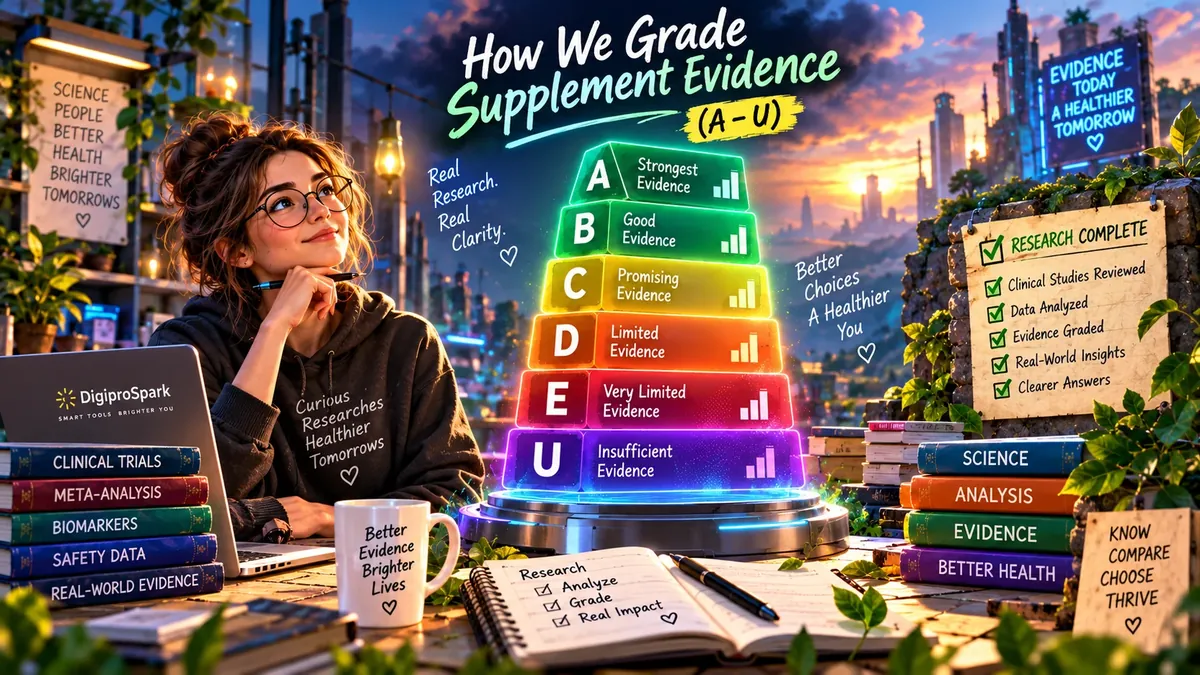
- Grade A: Finished-formula evidence. An independent human trial tested the exact product, at its actual dose. Strongest. Rare in this industry.
- Grade B: Matching ingredient & dose. Human research on the same ingredient form at a comparable dose to what the product discloses. Solid, when the dose is visible.
- Grade C: Ingredient research, uncertain applicability. The ingredient has human research, but the product’s form, dose, or combination makes it unclear whether that research applies. Most proprietary-blend products live here.
- Grade D: Mechanistic, cell, or animal only. A plausible mechanism, not proof of a result in people.
- Grade U: Unverifiable. We couldn’t confirm the claim from credible sources.
How grades map to the 5-Point Filter
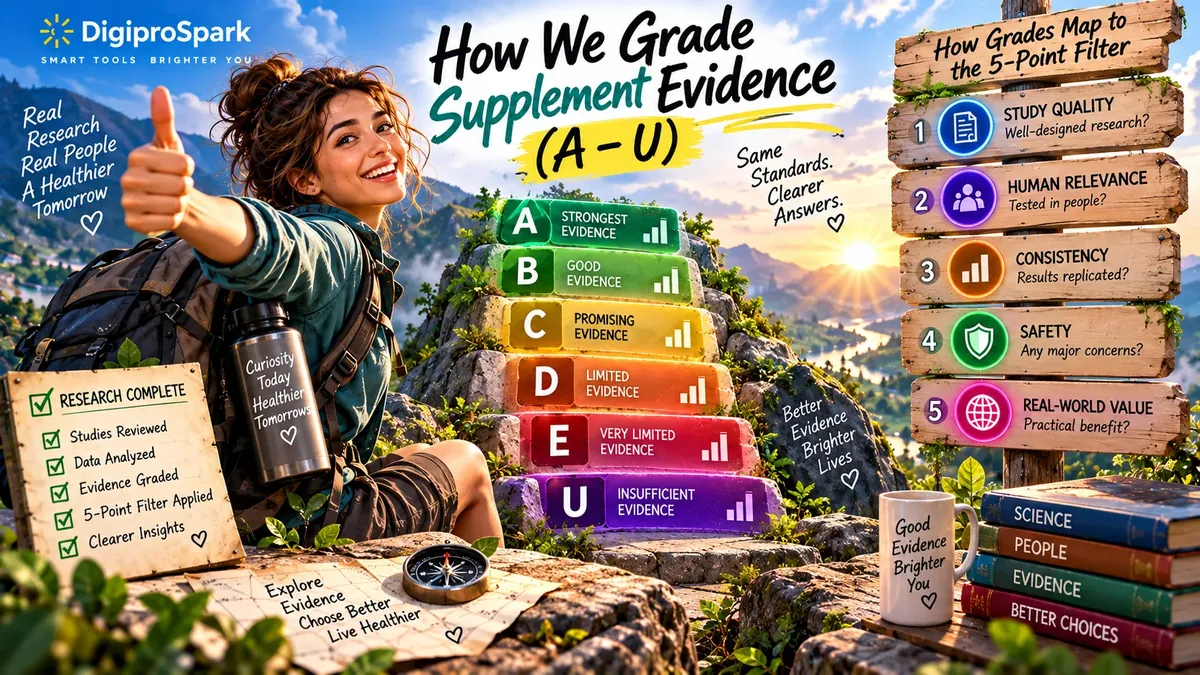
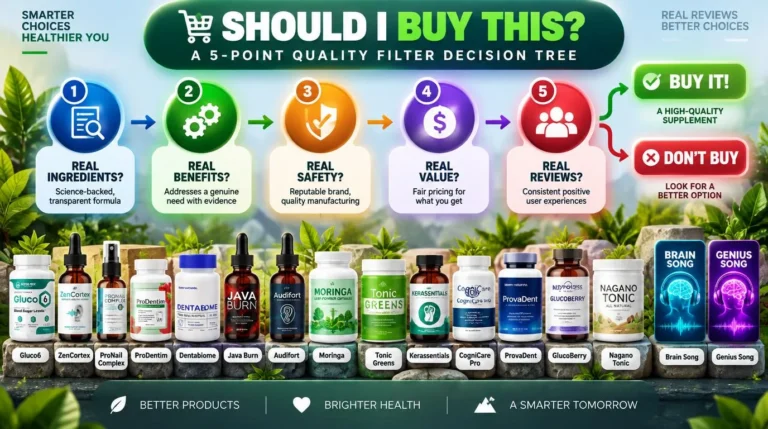
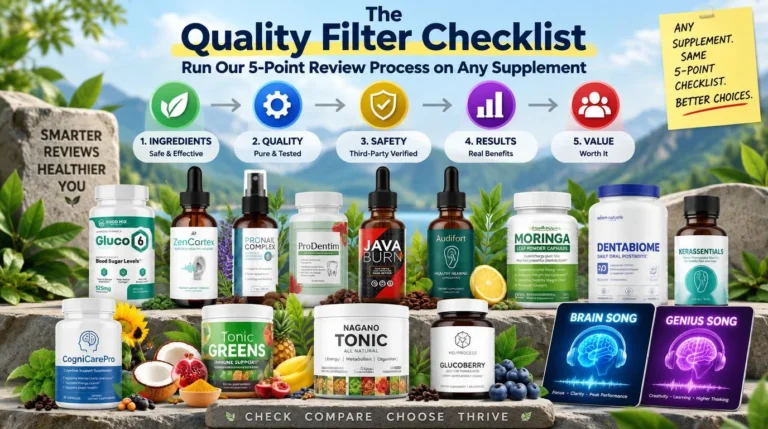
Grades feed directly into our 5-Point Quality Filter. A product can only earn a full Recommended when its key actives reach Grade A or B: which requires disclosed, clinically-relevant doses. When the doses are hidden in a proprietary blend, the actives can’t rise above Grade C for that product, so the dosing check can’t pass and the product gets a Conditional verdict, not a recommendation.
Why most supplements are Grade C
It isn’t cynicism, it’s structure. Most direct-response supplements combine several ingredients in a proprietary blend and have never funded an independent trial of the finished formula. That caps them at Grade C by definition. You can see exactly how this plays out in our Nagano Lean Body Tonic review and Java Burn review, both are Grade C at the product level, and both are Conditional. Products that do disclose full, studied doses can reach Grade B and a genuine recommendation, those are the ones we highlight as top picks.
The bottom line
A grade is a promise about certainty, not a verdict on an ingredient. When you see Grade C on our pages, read it as: “there’s real research on this ingredient, but we can’t confirm it applies to this product as sold.” That honesty is the whole point: and it’s why you can trust the reviews that do say “recommended.”
Educational content only, not medical advice.
References
- Google Search, Write high-quality product reviews, developers.google.com
- NIH Office of Dietary Supplements: ods.od.nih.gov
- PubMed: pubmed.ncbi.nlm.nih.gov
Enjoying our content? Add us as a preferred source on Google.
Add us as a preferred source on GoogleDisclosures
Medical disclaimer
The statements on this page have not been evaluated by the Food and Drug Administration. This product is not intended to diagnose, treat, cure, or prevent any disease. Content is for educational and informational purposes only. Always consult a qualified healthcare professional before starting any new supplement.
Who wrote this
We are not doctors. We are independent researchers who spend dozens of hours analyzing peer-reviewed clinical trials so you don't have to. Every claim on this page is scored against our 5-Point Quality Filter and linked to its source.
Affiliate disclosure
DigiproSpark may earn a commission from purchases made through the affiliate links on this page at no additional cost to you. We only recommend products that pass our 5-Point Quality Filter. Our editorial opinions are not influenced by compensation.

About the author
Satwasheel Gharde
Founder & Head of Research, DigiproSpark
Founder of Smiley Social and Head of Research at DigiproSpark. Personally researches and edits every supplement review here using the 5-Point Quality Filter: transcribing the printed Supplement Facts label, sourcing peer-reviewed human evidence (PubMed / PMC / NIH), and checking clinical dosing before any verdict. Our reviews are evidence-and-label analyses, not medical advice; material safety points (drug interactions, contraindications) are written conservatively and flagged for a qualified clinician or pharmacist to confirm. Conflict-of-interest: pages may contain affiliate links that can earn a commission, which never changes a rating. Corrections & editorial contact: smileysocial@digiprospark.com.
Last updated: October 19, 2026