How-To Guides
How Your Metabolism Changes After 35 (and What Actually Helps)
Does your metabolism really slow after 35? What the science actually shows, what changes with age, and where supplements honestly fit.
Disclosure: DigiproSpark may earn a commission if you buy through links on this page, at no extra cost to you. It does not affect our evaluation. Educational content only; not medical advice. See our affiliate disclosure and medical disclaimer.
If you are over 35 and researching a “metabolism” supplement, start here: because the single most common claim behind those products is not quite true. Below is what the best current science actually says about metabolism and age, what really changes, and where a supplement can (and can’t) help.
Does your metabolism really “crash” after 35?
The popular story, that your metabolism slows sharply in your 30s, is largely a myth. The largest study of human energy expenditure to date, published in Science in 2021, measured more than 6,600 people from 8 days to 95 years old and found that, once you adjust for body size and muscle, total daily energy expenditure is remarkably stable from about age 20 to 60. Metabolism per pound actually peaks in infancy and only begins a slow decline after roughly age 60, not 30 or 35. So a product promising to “reverse” a metabolic collapse that mostly isn’t happening is solving the wrong problem.
What actually changes with age
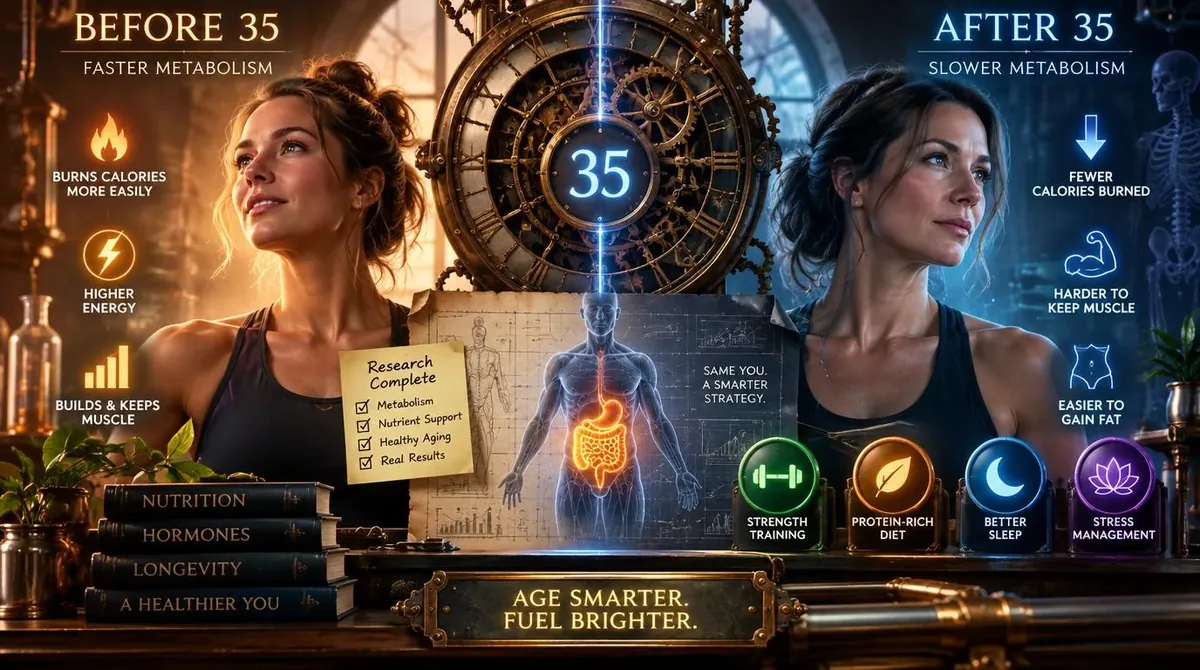
Weight management does often get harder with age, but the drivers are usually behavioural and structural, not a broken metabolism: see the NIH NIDDK’s weight-management guidance for the evidence-based basics:
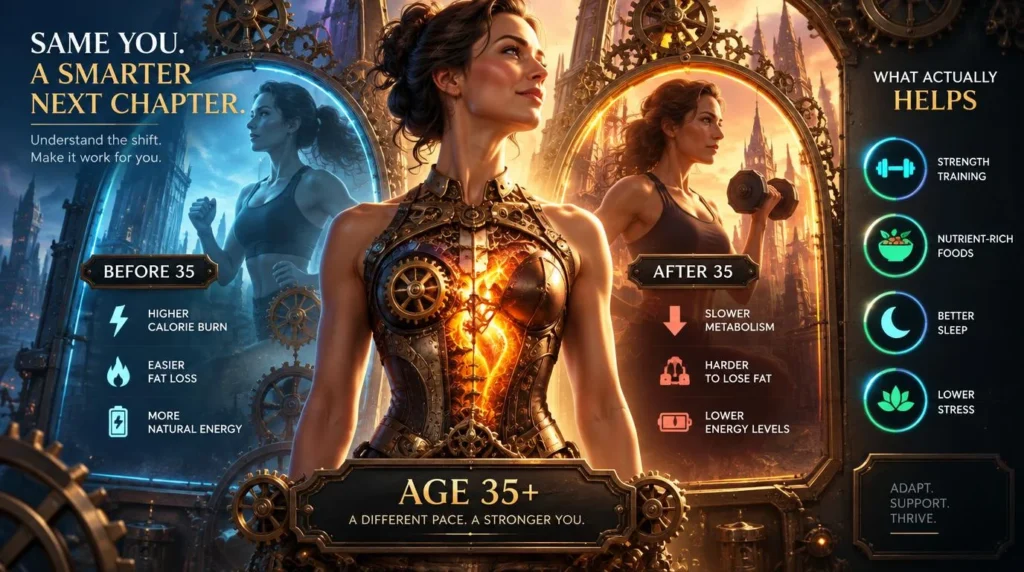
- Muscle loss (sarcopenia). Adults can lose roughly 3–8% of muscle mass per decade after 30 if they don’t train. Muscle is metabolically active, so less of it means fewer calories burned at rest.
- Less daily movement. Non-exercise activity (walking, fidgeting, standing) tends to fall over the years: often the biggest hidden change in total calories burned.
- Sleep, stress and hormones. Poorer sleep and higher chronic stress nudge appetite and fat storage, hormonal shifts (including perimenopause) play a real but usually modest role.
What genuinely helps (backed by evidence)
- Resistance training. The most reliable lever: it preserves and rebuilds the muscle that age and inactivity erode.
- Enough protein. Most active adults do better toward the higher end of the recommended intake to support muscle, especially when losing weight.
- Daily movement. Steps and general activity often move the needle more than any workout.
- Sleep and stress management. Unglamorous, but they influence appetite and adherence more than most supplements.
Where supplements fit: honestly
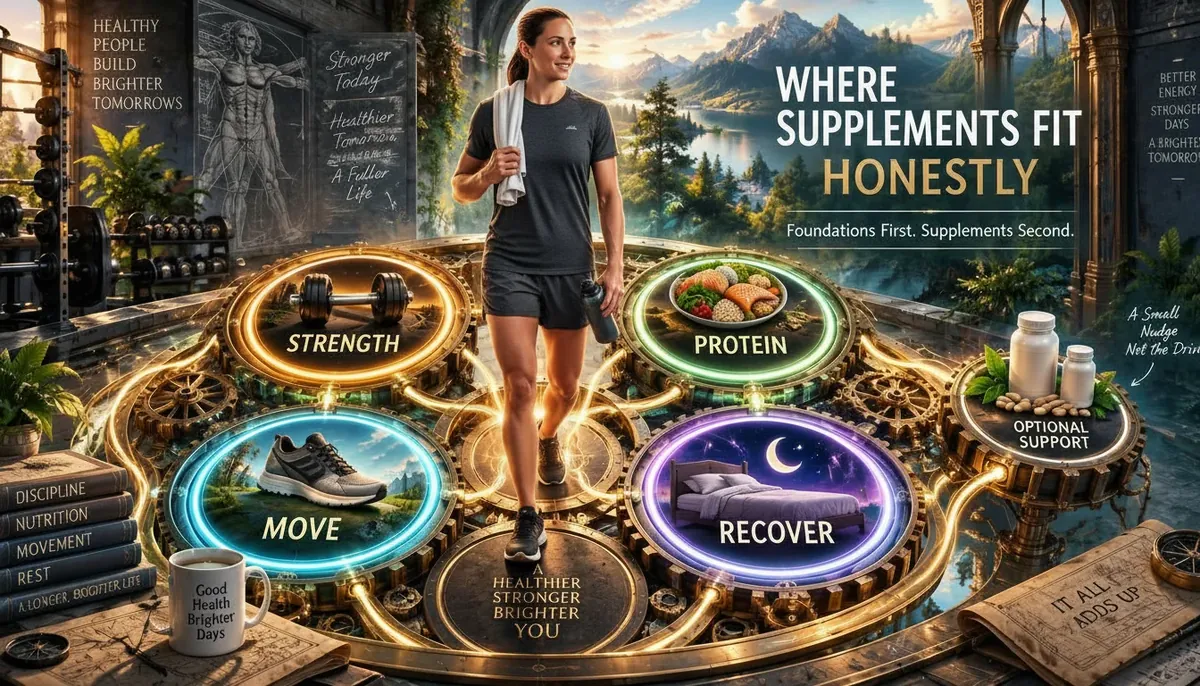
A supplement is, at best, a small add-on to the four levers above, never a replacement for them. Many “metabolism” powders lean on green tea catechins, which have a real but modest effect (a few extra calories a day in studies), and most hide their doses inside proprietary blends, so you can’t confirm you’re getting a studied amount. That’s why we score those products with a Conditional verdict rather than a recommendation. If you’re weighing a specific one, our evidence-first breakdowns of Nagano Lean Body Tonic and Java Burn show exactly what the ingredients can and cannot do, and how we grade the evidence.
The bottom line
Your metabolism probably hasn’t “crashed”: but muscle loss, less movement, and lifestyle have likely shifted the maths. Fix those first. Treat any supplement as a minor, optional nudge, judge it on disclosed doses and real evidence, and keep your expectations realistic.
This article is for education only and is not medical advice. Talk to a qualified professional before changing your diet, exercise, or supplement routine, especially if you have a medical condition or take medication.
References
- Pontzer H, et al. “Daily energy expenditure through the human life course.” Science, 2021. DOI 10.1126/science.abe5017
- NIH Office of Dietary Supplements, ods.od.nih.gov
- NIA, Sarcopenia and muscle loss with age, nia.nih.gov
Enjoying our content? Add us as a preferred source on Google.
Add us as a preferred source on GoogleDisclosures
Medical disclaimer
The statements on this page have not been evaluated by the Food and Drug Administration. This product is not intended to diagnose, treat, cure, or prevent any disease. Content is for educational and informational purposes only. Always consult a qualified healthcare professional before starting any new supplement.
Who wrote this
We are not doctors. We are independent researchers who spend dozens of hours analyzing peer-reviewed clinical trials so you don't have to. Every claim on this page is scored against our 5-Point Quality Filter and linked to its source.
Affiliate disclosure
DigiproSpark may earn a commission from purchases made through the affiliate links on this page at no additional cost to you. We only recommend products that pass our 5-Point Quality Filter. Our editorial opinions are not influenced by compensation.

About the author
Satwasheel Gharde
Founder & Head of Research, DigiproSpark
Founder of Smiley Social and Head of Research at DigiproSpark. Personally researches and edits every supplement review here using the 5-Point Quality Filter: transcribing the printed Supplement Facts label, sourcing peer-reviewed human evidence (PubMed / PMC / NIH), and checking clinical dosing before any verdict. Our reviews are evidence-and-label analyses, not medical advice; material safety points (drug interactions, contraindications) are written conservatively and flagged for a qualified clinician or pharmacist to confirm. Conflict-of-interest: pages may contain affiliate links that can earn a commission, which never changes a rating. Corrections & editorial contact: smileysocial@digiprospark.com.
Last updated: October 19, 2026