How-To Guides
Proprietary Blends Explained: Why “Hidden Doses” Matter
What a proprietary blend is, why brands hide per-ingredient doses, how to read a label, and why hidden-dose products get a Conditional verdict.
Disclosure: DigiproSpark may earn a commission if you buy through links on this page, at no extra cost to you. It does not affect our evaluation. Educational content only; not medical advice. See our affiliate disclosure and medical disclaimer.
Open the label of almost any weight-loss or “metabolism” supplement and you’ll see the phrase proprietary blend. It sounds premium. In practice it’s the single biggest reason we can’t tell you whether a product will work. Here’s what it means, why brands use it, and how to read past it.
What is a proprietary blend?
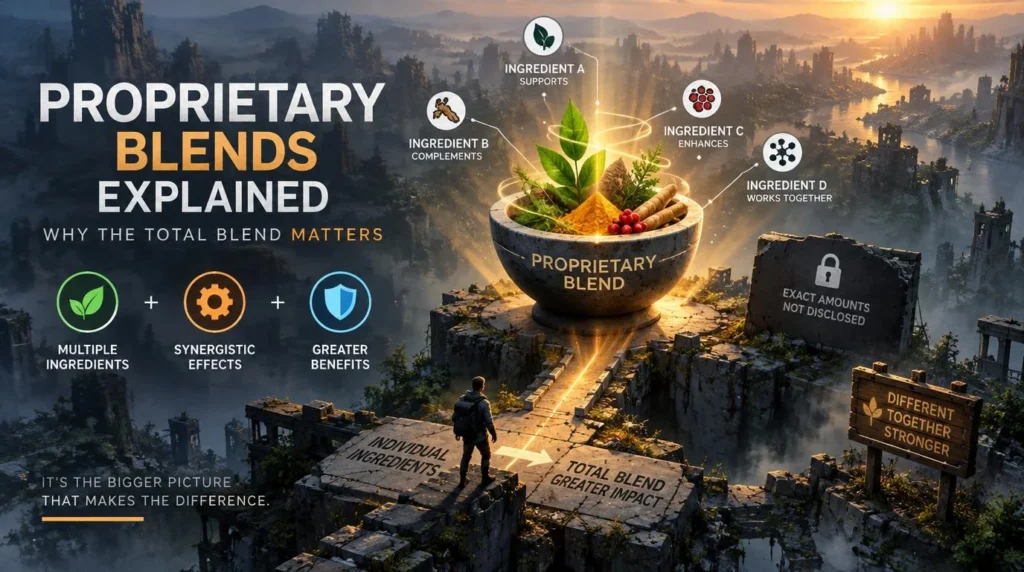
A proprietary blend is a group of ingredients listed together under one name with a single total weight, for example, “Metabolic Blend 800 mg”, instead of disclosing how many milligrams of each ingredient it contains. US labeling rules permit this: the FDA’s own labeling guide confirms a blend’s total and its ingredients in descending order by weight must be declared, but not the amount of each one.
Why brands use them
- To protect a “secret formula”: the stated reason, though competitors can usually reverse-engineer a formula anyway.
- To hide under-dosing. The less flattering reason: a blend can list an impressive-sounding ingredient that’s present in a tiny, sub-effective amount (“fairy dusting”) without anyone being able to tell.
Why hidden doses matter to you
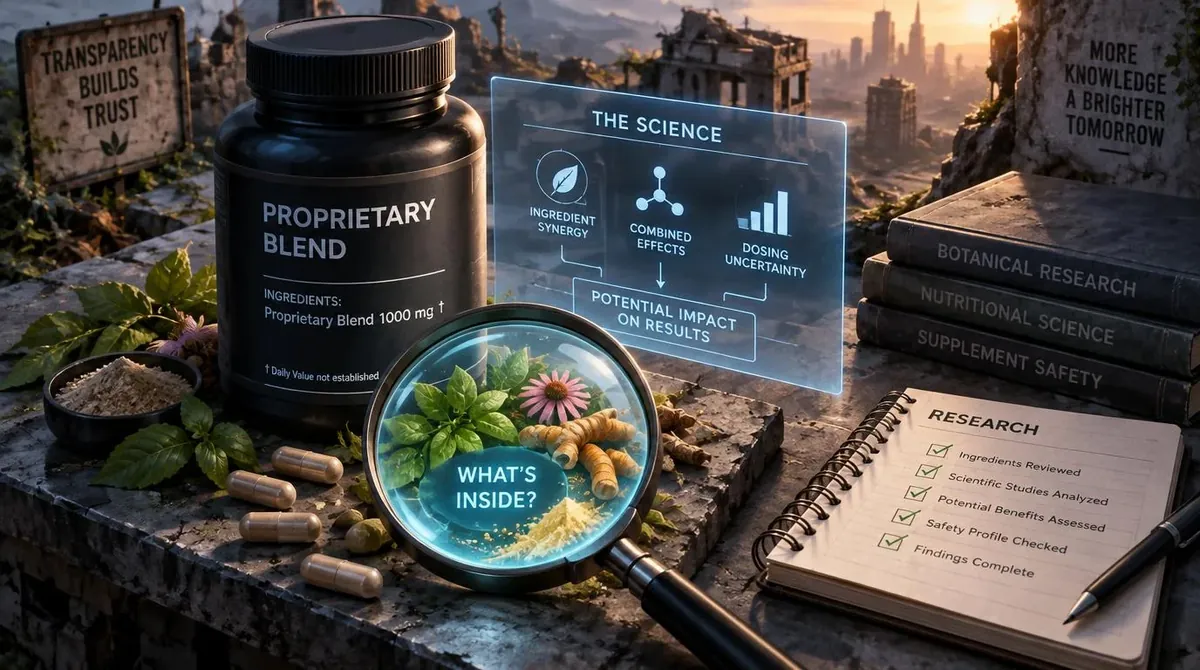
Almost every supplement ingredient only works within a specific dose range found in research. If you can’t see the dose, you can’t know whether the product delivers a studied amount or a sprinkle. Consider green tea’s EGCG: studies use roughly 100–400 mg a day for a modest metabolic effect. If a blend simply says “Green Tea Extract” inside an 800 mg total shared with eight other ingredients, the real EGCG dose could be a fraction of what was tested: and the product’s marketing still gets to borrow the research.
How to read a label like a pro
- Look for a full Supplement Facts panel with a per-ingredient amount for each active: not just a blend total.
- Compare each disclosed dose to the range used in human studies.
- Treat any active hidden inside a proprietary blend as unverifiable: assume nothing about its dose.
- Check the blend’s total: if it’s small (say a few hundred mg) but lists many ingredients, a clinically meaningful dose of any single one is unlikely.
How we score proprietary-blend products

Our 5-Point Quality Filter can’t pass a product on dosing when the doses are hidden: so a proprietary-blend product earns an honest Conditional verdict, not a recommendation. We still review it fully and fairly, we just won’t pretend we can verify what we can’t. You can see this in practice in our Nagano Lean Body Tonic review and Java Burn review, and in how we grade the evidence A–U.
The bottom line
A proprietary blend isn’t automatically a scam: but it is a transparency gap, and it puts the burden on you. Reward brands that disclose every dose, be sceptical of the ones that don’t. When in doubt, judge a supplement on what it’s willing to show you, not on the story it tells.
Educational content only, not medical advice. Consult a qualified professional before starting any supplement.
References
- FDA, Dietary Supplement Labeling Guide, fda.gov/food/dietary-supplements
- NIH Office of Dietary Supplements: ods.od.nih.gov
Enjoying our content? Add us as a preferred source on Google.
Add us as a preferred source on GoogleDisclosures
Medical disclaimer
The statements on this page have not been evaluated by the Food and Drug Administration. This product is not intended to diagnose, treat, cure, or prevent any disease. Content is for educational and informational purposes only. Always consult a qualified healthcare professional before starting any new supplement.
Who wrote this
We are not doctors. We are independent researchers who spend dozens of hours analyzing peer-reviewed clinical trials so you don't have to. Every claim on this page is scored against our 5-Point Quality Filter and linked to its source.
Affiliate disclosure
DigiproSpark may earn a commission from purchases made through the affiliate links on this page at no additional cost to you. We only recommend products that pass our 5-Point Quality Filter. Our editorial opinions are not influenced by compensation.

About the author
Satwasheel Gharde
Founder & Head of Research, DigiproSpark
Founder of Smiley Social and Head of Research at DigiproSpark. Personally researches and edits every supplement review here using the 5-Point Quality Filter: transcribing the printed Supplement Facts label, sourcing peer-reviewed human evidence (PubMed / PMC / NIH), and checking clinical dosing before any verdict. Our reviews are evidence-and-label analyses, not medical advice; material safety points (drug interactions, contraindications) are written conservatively and flagged for a qualified clinician or pharmacist to confirm. Conflict-of-interest: pages may contain affiliate links that can earn a commission, which never changes a rating. Corrections & editorial contact: smileysocial@digiprospark.com.
Last updated: October 21, 2026