Safety
Gluco6 & GlucoBerry: Blood Sugar Medication Interaction Safety
Gluco6 and GlucoBerry both contain ingredients with real, published blood-sugar-lowering mechanisms: which is exactly why anyone taking a prescribed diabetes medication needs to understand the genuine interaction risk before adding either one, not treat it as a routine "ask your doctor" footnote.
Disclosure: DigiproSpark may earn a commission if you buy through links on this page, at no extra cost to you. It does not affect our evaluation. Educational content only; not medical advice. See our affiliate disclosure and medical disclaimer.
Watch
Video Walkthrough
Safety
What the Real Interaction Risk Actually Looks Like
The core mechanism concern
Several ingredients in both formulas, gymnema sylvestre and chromium picolinate in Gluco6, and Delphinol maqui berry extract in GlucoBerry, have real, published human evidence for lowering blood glucose or improving insulin sensitivity through genuinely different biological pathways than most prescription diabetes drugs. Taking any of these alongside metformin, a sulfonylurea, or insulin means two or more separate glucose-lowering mechanisms are active in your body at once.
Why "natural" doesn't mean "additive-risk-free"
A supplement ingredient having real evidence for lowering blood sugar is precisely what makes it capable of compounding with a prescription drug's effect: the same property that makes an ingredient potentially useful is the property that creates interaction risk. This isn't a hypothetical: gymnema's glucose-lowering mechanism specifically has documented case reports of contributing to hypoglycemia when combined with diabetes medication.
The real symptom to watch for
Hypoglycemia (blood sugar dropping too low) can cause shakiness, sweating, confusion, rapid heartbeat, and in severe cases, loss of consciousness. Anyone starting Gluco6 or GlucoBerry while on a glucose-lowering medication should monitor their blood sugar more frequently than usual in the first several weeks, not just when they happen to feel symptoms.
What neither product's marketing states clearly
Neither Gluco6's nor GlucoBerry's own sales material provides specific guidance for medication-interaction monitoring or dose adjustment: this is a real transparency gap common across the direct-to-consumer supplement industry, not unique to either product, and one more reason this decision shouldn't be made without your prescribing doctor's involvement.
The right way to approach this
Talk to your prescribing physician or pharmacist before starting either supplement, specifically asking about your current medication's hypoglycemia risk profile. Many doctors are comfortable with a carefully monitored trial, adjusting medication dosage if needed: but that adjustment should be a medical decision, not a self-directed one.
Why This Applies to Both Products, Not Just One
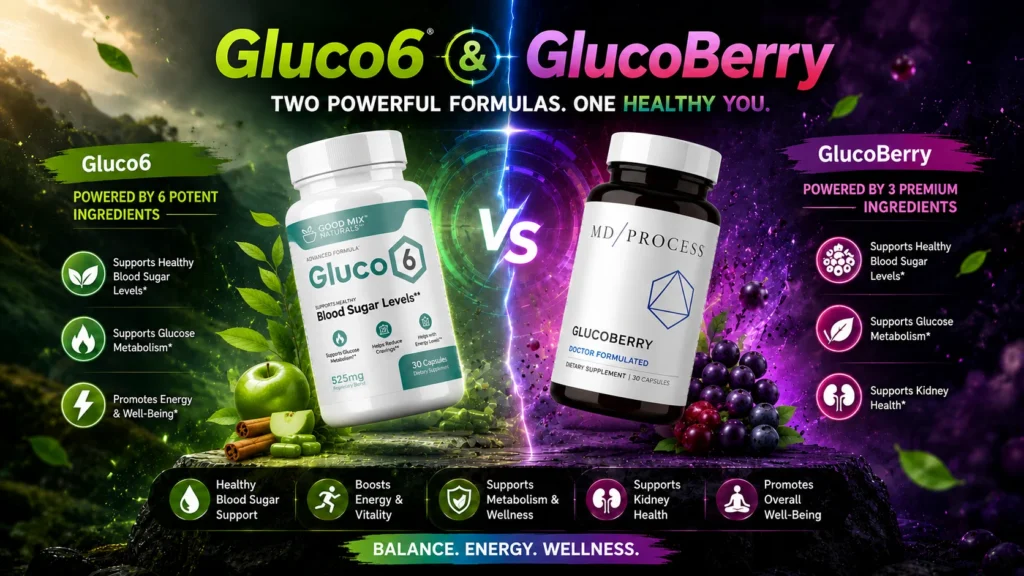
It would be easy to single out one product as "riskier," but the honest finding here is that both Gluco6 and GlucoBerry carry a real, mechanistically-grounded interaction concern, just via different headline ingredients. Gluco6's gymnema and chromium both have documented glucose-lowering evidence, GlucoBerry's Delphinol maqui berry extract has a published 3-month RCT specifically measuring HbA1c change, direct evidence of a real blood-sugar effect. A real blood-sugar effect is exactly the mechanism that creates interaction risk with glucose-lowering medication, the same property that makes an ingredient potentially useful for blood sugar support.
What to Actually Ask Your Doctor
A more useful conversation than a generic "is this safe" question: ask your doctor specifically whether your current medication and dose already carries meaningful hypoglycemia risk on its own (some do, some don't), whether they'd want you checking your blood sugar more frequently during the first few weeks of adding a supplement, and whether any symptom (shakiness, unusual fatigue, sweating) should prompt an immediate call rather than waiting for a scheduled follow-up. Bring the actual ingredient list and doses (where disclosed) to that conversation rather than just the product name: see our Gluco6 vs GlucoBerry comparison for GlucoBerry's fully-disclosed dosing versus Gluco6's proprietary blend, since a doctor can only meaningfully assess a dose they can actually see.
Who Should Be Especially Cautious
Anyone on insulin or a sulfonylurea-class medication (which work by directly increasing insulin activity, and already carry a real baseline hypoglycemia risk) should treat this combination with particular care and involve their doctor before starting either supplement, not after. Anyone with a history of hypoglycemic episodes, older adults (who may have less pronounced hypoglycemia warning symptoms), and anyone recently changed to a new medication dose should also wait for a stable baseline before adding either product. Neither Gluco6 nor GlucoBerry is a substitute for prescribed diabetes medication or professional medical management: both are marketed as blood-sugar support supplements, not treatments, and should be treated as an addition to, never a replacement for, your actual care plan.
Enjoying our content? Add us as a preferred source on Google.
Add us as a preferred source on GoogleDisclosures
Medical disclaimer
This content is for educational purposes only and is not medical advice. It has not been evaluated by the FDA and is not intended to diagnose, treat, cure or prevent any disease. Consult a qualified healthcare professional before starting any supplement.
Who wrote this
We are not doctors. We are independent researchers who spend dozens of hours analyzing peer-reviewed clinical trials so you don't have to. Every claim on this page is scored against our 5-Point Quality Filter and linked to its source.
Affiliate disclosure
DigiproSpark may earn a commission from purchases made through affiliate links on this page at no extra cost to you. It does not change our editorial opinions.

About the author
Satwasheel Gharde
Founder & Head of Research, DigiproSpark
Founder of Smiley Social and Head of Research at DigiproSpark. Personally researches and edits every supplement review here using the 5-Point Quality Filter: transcribing the printed Supplement Facts label, sourcing peer-reviewed human evidence (PubMed / PMC / NIH), and checking clinical dosing before any verdict. Our reviews are evidence-and-label analyses, not medical advice; material safety points (drug interactions, contraindications) are written conservatively and flagged for a qualified clinician or pharmacist to confirm. Conflict-of-interest: pages may contain affiliate links that can earn a commission, which never changes a rating. Corrections & editorial contact: smileysocial@digiprospark.com.
Author of 17 published product reviews on DigiproSpark, each researched under the 5-Point Quality Filter. See the methodology →
Last updated: October 21, 2026