Nail & Skin Health
Nail & Skin Health Supplements: A Buyer’s Guide to Topical Antifungals
A category buying guide for topical nail-fungus and skin-health products: real patch-test allergy rates, why most topical treatments fail from being abandoned too early, and honest verdicts for every product reviewed on this site.
Disclosure: DigiproSpark may earn a commission if you buy through links on this page, at no extra cost to you. It does not affect our evaluation. Educational content only; not medical advice. See our affiliate disclosure and medical disclaimer.
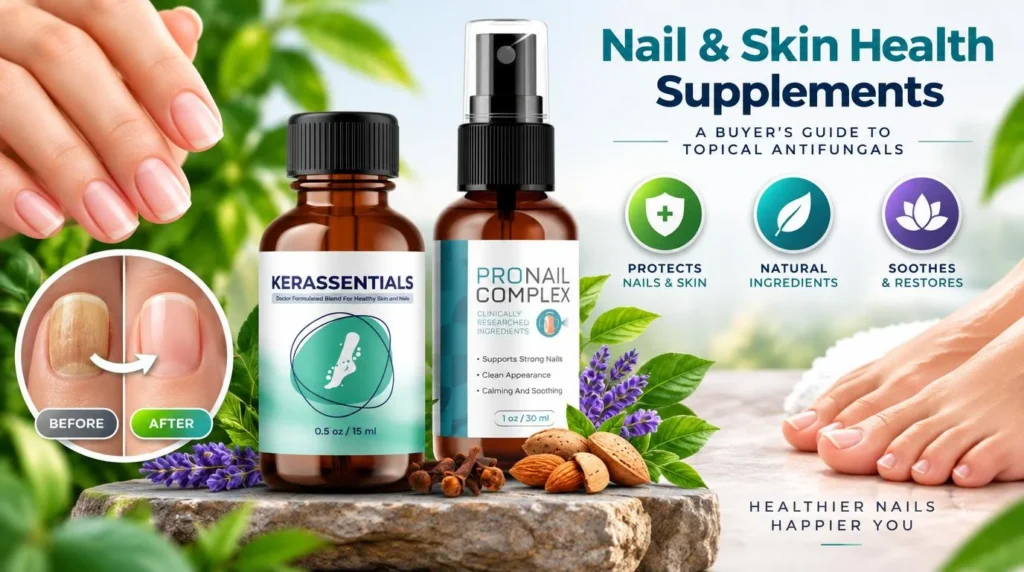
The two topical products we’ve reviewed in this category share the same two headline actives, which makes this one of the more directly comparable categories on the site. This guide covers what actually determines whether a topical antifungal works: and it usually isn’t the ingredient list alone.
Where every product in this category currently stands
Every product below went through the same 5-Point Quality Filter and carries a real, calculated DigiproSpark Trust Score: not a marketing rating. As of this writing, no product in this category has earned an unqualified "Recommended" verdict; every one below is either Conditional or Not Recommended, and each review explains exactly why.
- Kerassentials: Trust Score 2.6/5, Conditional
- ProNail Complex: Trust Score 2.7/5, Conditional
What to check before buying in this category
- Is the active ingredient concentration disclosed? Undecylenic acid is an FDA OTC-monograph-recognized antifungal active: a real regulatory fact, not just a marketing claim. But its effective concentration matters, and not every product discloses it: a direct category competitor discloses 10%, while others disclose none of theirs.
- Are you prepared for the real commitment window? The founding tea-tree-oil trial behind this category used twice-daily application for 6 months. Toenails grow roughly 1–1.5mm per month, which means visible improvement genuinely takes months: most topical treatments that “don’t work” were abandoned before that window closed, not proven ineffective.
- Have you patch-tested first? Real, published data puts tea tree oil contact-allergy rates at roughly 0.1–3.5% in patch-testing studies, and oxidized (older, air-exposed) oil is measurably more allergenic than fresh. This is a genuine, checkable risk, not a generic caution.
- Does the refund window match the realistic results timeline? A 60-day guarantee on a product whose own founding research needed 6 months is a real, specific mismatch worth checking before buying.
What our research actually found
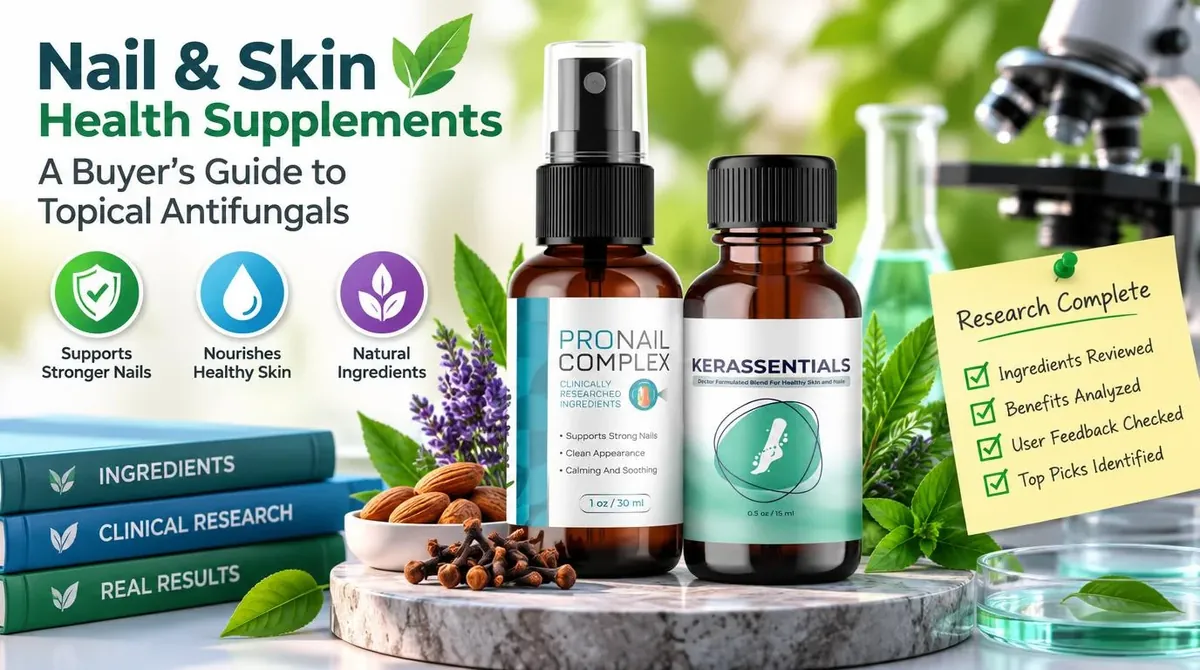
Kerassentials and ProNail Complex both center on tea tree oil and undecylenic acid, so the underlying research (a 1994 clinical trial, an FDA OTC monograph, patch-test allergy data) applies to both fairly evenly. What differs is transparency: Kerassentials discloses none of its 8 active concentrations, while its direct competitor Funginix discloses 10% undecylenic acid: a real, checkable gap. Both share the same real risk that most treatment failures trace back to giving up before the months-long window the original research actually used.
Explore the research behind these verdicts
These are the ingredient-science, safety, and side-by-side comparison pieces that back the verdicts above: each one cites its own real sources rather than repeating marketing claims.
- Tea Tree Oil for Nail Fungus: What the Clinical Trials Actually Show
- Undecylenic Acid: The FDA-Recognized Antifungal Active, Explained
- Essential Oil Sensitization: What to Know Before Using a Topical Tea Tree Oil Product
- How to Apply a Topical Nail-Fungus Treatment Correctly (and Why Most People Quit Too Early)
- Kerassentials vs Funginix: Which Topical Antifungal Discloses More?
- ProNail Complex vs Kerassentials: Which Antifungal Fits You?
The bottom line
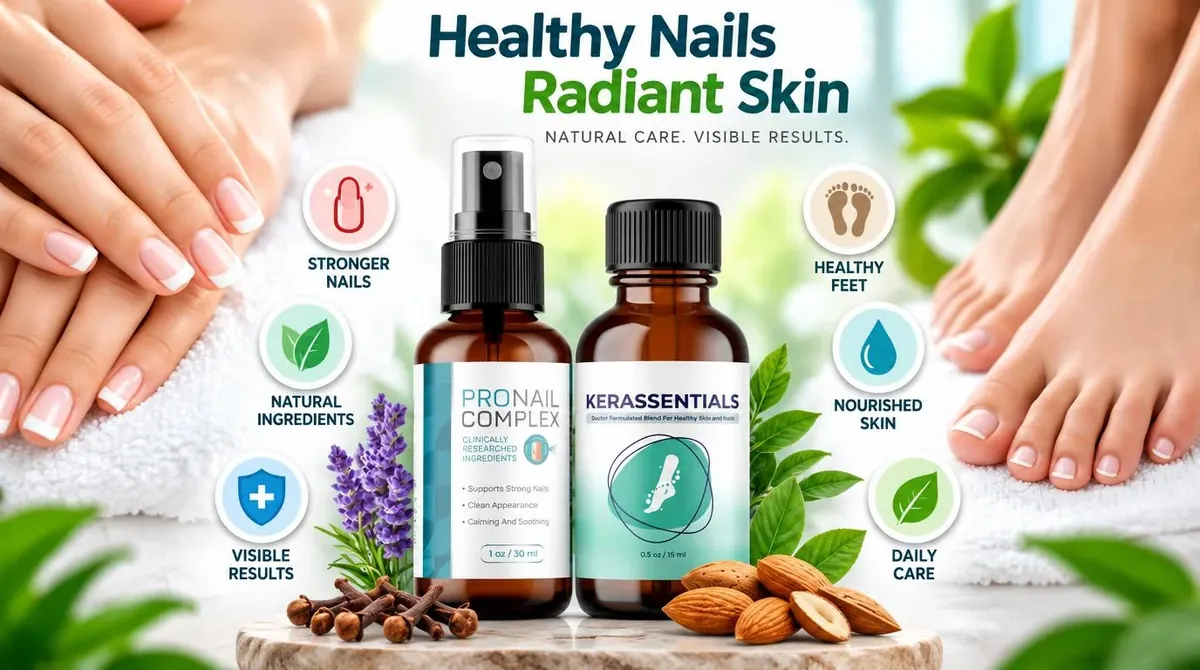
Both products we’ve reviewed in this category share real, FDA-monograph-recognized actives and a real allergy-rate risk worth patch-testing for first: the honest differentiator between them (and against outside competitors like Funginix) is disclosed concentration, not the underlying ingredient science.
Not sure about a specific product? Run it through our filter
Before you decide on anything in this category, walk it through the same 5-Point Quality Filter we use in every review, five honest questions, one honest verdict:
Should I Buy This? A 5-Point Quality Filter Walkthrough
Answer honestly about the specific product you’re looking at right now.
1. Ingredient Evidence: is at least one active ingredient backed by real human clinical trials, not just a lab or animal study?
2. Formula Transparency: does the label disclose every ingredient’s individual amount, without hiding it inside a proprietary blend?
3. Safety: does the product’s own page disclose real cautions or interactions, not just generic “consult your doctor” boilerplate?
4. Value & Guarantee: have you actually read the vendor’s real refund policy page, not just the countdown badge on the sales page?
5. Brand Trust: can you identify a real, accountable company behind this product, not just a brand name on a sales page?
Educational content only, not medical advice. Consult a qualified healthcare professional before starting any supplement, especially if you take prescription medication or have an existing health condition.
Enjoying our content? Add us as a preferred source on Google.
Add us as a preferred source on GoogleDisclosures
Medical disclaimer
The statements on this page have not been evaluated by the Food and Drug Administration. This product is not intended to diagnose, treat, cure, or prevent any disease. Content is for educational and informational purposes only. Always consult a qualified healthcare professional before starting any new supplement.
Who wrote this
We are not doctors. We are independent researchers who spend dozens of hours analyzing peer-reviewed clinical trials so you don't have to. Every claim on this page is scored against our 5-Point Quality Filter and linked to its source.
Affiliate disclosure
DigiproSpark may earn a commission from purchases made through the affiliate links on this page at no additional cost to you. We only recommend products that pass our 5-Point Quality Filter. Our editorial opinions are not influenced by compensation.

About the author
Satwasheel Gharde
Founder & Head of Research, DigiproSpark
Founder of Smiley Social and Head of Research at DigiproSpark. Personally researches and edits every supplement review here using the 5-Point Quality Filter: transcribing the printed Supplement Facts label, sourcing peer-reviewed human evidence (PubMed / PMC / NIH), and checking clinical dosing before any verdict. Our reviews are evidence-and-label analyses, not medical advice; material safety points (drug interactions, contraindications) are written conservatively and flagged for a qualified clinician or pharmacist to confirm. Conflict-of-interest: pages may contain affiliate links that can earn a commission, which never changes a rating. Corrections & editorial contact: smileysocial@digiprospark.com.
Last updated: October 21, 2026