Ingredient science
L-Arabinose (“Sukre”): The Real Science Behind the Blood-Sugar “Sugar Hack”
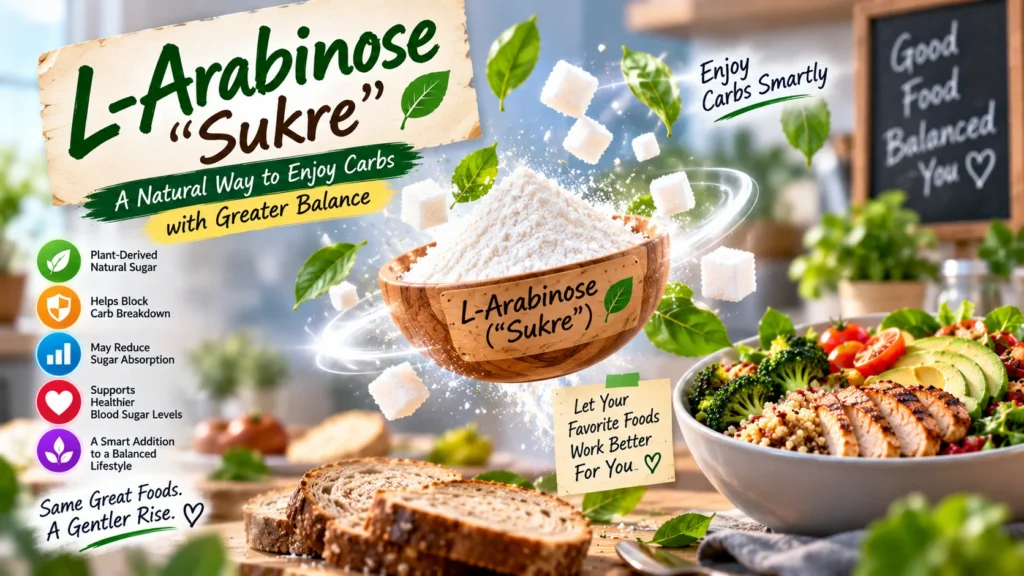
L-arabinose, branded "Sukre" in some formulas, is one of the more mechanistically specific ingredients we've researched for this site: a real, published, double-blind crossover trial backs it, but its effect is narrower than the marketing around it usually lets on. Our Gluco6 review covers this ingredient briefly as one of seven actives inside an undisclosed blend, this page unpacks the actual research.
Disclosure: DigiproSpark may earn a commission if you buy through links on this page, at no extra cost to you. It does not affect our evaluation. Educational content only; not medical advice. See our affiliate disclosure and medical disclaimer.
Watch
Video Walkthrough
The evidence
What the research actually measured
The mechanism is real: but it's narrow, on purpose
L-arabinose works by inhibiting sucrase, the digestive enzyme in the small intestine that splits sucrose (ordinary table sugar) into its two component sugars, glucose and fructose, so they can be absorbed. That means its documented effect specifically blunts the glucose spike from meals or drinks containing SUCROSE, it does not have the same mechanism against glucose from other carbohydrate sources, such as starches (bread, rice, potatoes) or other sugars like glucose or fructose consumed on their own, since those don't require the sucrase enzyme to be digested.
This is a genuinely different, narrower claim than a general "blood sugar support" ingredient, and it's worth knowing precisely what it does and doesn't cover before assuming it acts broadly across every food you eat. A supplement containing L-arabinose is, mechanistically, doing something closer to "blunting the sugar spike from sucrose specifically" than "lowering blood sugar in general", a real distinction with practical implications for when it would and wouldn't plausibly help.
How strong is the effect, really?
The crossover trial's numbers are genuinely striking for a natural-ingredient study: a 57–67% reduction in early glucose appearance is a real, measurable, statistically significant effect, not a marginal trend easily explained by chance. But it was measured in healthy young adults given a controlled sucrose load in a lab setting, not in people with diabetes or prediabetes eating a normal, complex mixed meal. Real-world meals contain fat, protein and fiber alongside sugar, all of which already slow glucose absorption to some degree on their own, so the effect size in everyday eating is plausibly smaller than the controlled-trial number, though this specific real-world scenario hasn't been separately measured in published research.
A separate trial pairing L-arabinose with chromium found the combination lowered both glucose and insulin after an acute oral sucrose challenge, relevant context since several commercial blood-sugar formulas, Gluco6 included, pair the two ingredients together, though again, this was tested as an acute single-challenge design, not a longer-term daily-use trial reflecting ordinary eating patterns over weeks or months.
Where this applies to Gluco6
Gluco6 lists L-arabinose (marketed under the brand name "Sukre") as one of seven named actives inside a 525mg proprietary blend: the label does not disclose how much of that 525mg is L-arabinose specifically, so we can't confirm whether Gluco6's actual amount comes anywhere near the doses used in the trials referenced above. This is the same transparency limitation that applies to every ingredient in that blend, not something specific to L-arabinose.
See our full Gluco6 review for the complete ingredient-by-ingredient breakdown, including a real gap we found between the product's stimulant-free-style marketing framing and a genuine stimulant compound (theacrine, marketed as TeaCrine) elsewhere in the same blend, plus our full Trust Score calculation and honest Conditional verdict.
Enjoying our content? Add us as a preferred source on Google.
Add us as a preferred source on GoogleDisclosures
Medical disclaimer
This content is for educational purposes only and is not medical advice. It has not been evaluated by the FDA and is not intended to diagnose, treat, cure or prevent any disease. Consult a qualified healthcare professional before starting any supplement.
Who wrote this
We are not doctors. We are independent researchers who spend dozens of hours analyzing peer-reviewed clinical trials so you don't have to. Every claim on this page is scored against our 5-Point Quality Filter and linked to its source.
Affiliate disclosure
DigiproSpark may earn a commission from purchases made through affiliate links on this page at no extra cost to you. It does not change our editorial opinions.

About the author
Satwasheel Gharde
Founder & Head of Research, DigiproSpark
Founder of Smiley Social and Head of Research at DigiproSpark. Personally researches and edits every supplement review here using the 5-Point Quality Filter: transcribing the printed Supplement Facts label, sourcing peer-reviewed human evidence (PubMed / PMC / NIH), and checking clinical dosing before any verdict. Our reviews are evidence-and-label analyses, not medical advice; material safety points (drug interactions, contraindications) are written conservatively and flagged for a qualified clinician or pharmacist to confirm. Conflict-of-interest: pages may contain affiliate links that can earn a commission, which never changes a rating. Corrections & editorial contact: smileysocial@digiprospark.com.
Author of 17 published product reviews on DigiproSpark, each researched under the 5-Point Quality Filter. See the methodology →
Last updated: October 21, 2026