Ingredient science
Huperzine A: The Real Mechanism Behind This Potent Nootropic (and Why It Needs Care)
Huperzine A is treated as a routine nootropic ingredient in most supplement marketing: but its actual mechanism is genuinely potent, sharing a drug class with some prescription Alzheimer's medications. Our CogniCare Pro review flags this, this page goes deeper into the real research and the caution it deserves.
Disclosure: DigiproSpark may earn a commission if you buy through links on this page, at no extra cost to you. It does not affect our evaluation. Educational content only; not medical advice. See our affiliate disclosure and medical disclaimer.
Watch
Video Walkthrough
The evidence
What the research actually shows
Why "potent mechanism" matters more than the marketing suggests
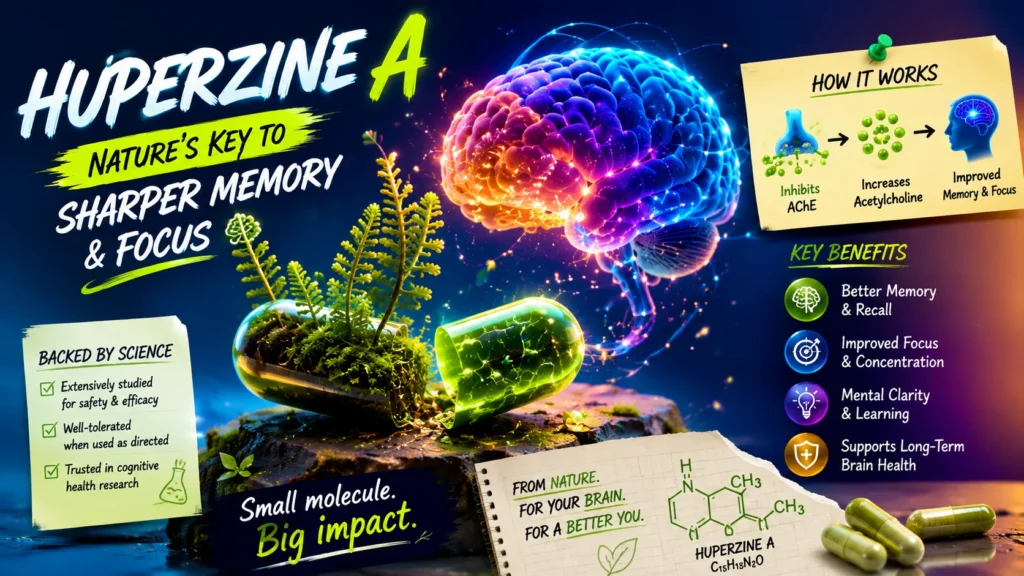
Acetylcholinesterase inhibition raises acetylcholine levels in the brain by blocking the enzyme that normally breaks that neurotransmitter down after it's used, a real, measurable pharmacological effect on brain chemistry, not a subtle herbal nudge. This is exactly the mechanism some prescription Alzheimer's medications, including donepezil and rivastigmine, use to support cognition in people with diagnosed cognitive decline. Huperzine A actually has better blood-brain-barrier penetration and a longer duration of action than several of those prescription comparators, according to the pharmacology research.
That doesn't automatically make Huperzine A dangerous at typical studied doses, the safety data below is genuinely reassuring within that range, but it does mean the ingredient should be thought about with the same seriousness you'd give a new medication, not treated like a routine vitamin or a mild adaptogenic herb such as ashwagandha or rhodiola. This is a framing most supplement marketing for nootropic products containing this ingredient simply doesn't emphasize, likely because "contains the same mechanism as an Alzheimer's drug" reads as more alarming than reassuring in a sales context, even though the underlying safety data is genuinely fine at appropriate doses.
The real interaction risk: cholinergic overload
Excessive cholinergic activity, from taking too much Huperzine A on its own, or combining it with other cholinergic supplements or medications that work through a similar or related pathway, can cause nausea, dizziness, excessive or unusually vivid dreaming, and in more significant cases, bradycardia (a clinically meaningful slowing of heart rate). This is a genuine, specific, checkable risk grounded in a real, well-understood mechanism, not a generic "consult your doctor before taking any supplement" boilerplate caution that applies equally to everything.
Anyone on another cholinergic medication (including certain treatments for myasthenia gravis, glaucoma, or Alzheimer's disease itself), any heart-rate-affecting medication such as beta-blockers, or anyone with a diagnosed heart-rhythm condition, should talk to a clinician before combining any of those with Huperzine A specifically, this is a more targeted, more important conversation to have than a generic "check with your doctor" note would suggest, precisely because the mechanism genuinely overlaps with real prescription drug classes.
Where this applies to CogniCare Pro
CogniCare Pro includes Huperzine A alongside Bacopa monnieri, Rhodiola, L-Tyrosine, phosphatidylserine, acetyl-L-carnitine and other named actives, but per-ingredient doses are not disclosed in any source we could find for this product, so the exact amount of Huperzine A actually in the formula is unknown to us and, functionally, to any buyer reading the label alone. Bacopa monnieri, notably, has real meta-analysis-level human evidence of its own for attention speed, a genuine strength elsewhere in the same formula, even as the Huperzine A dose question remains open.
See our full CogniCare Pro review for the complete ingredient-by-ingredient breakdown, our full Trust Score calculation, and an honest verdict that weighs this real interaction caution alongside the formula's genuine evidence-backed ingredients.
Enjoying our content? Add us as a preferred source on Google.
Add us as a preferred source on GoogleDisclosures
Medical disclaimer
This content is for educational purposes only and is not medical advice. It has not been evaluated by the FDA and is not intended to diagnose, treat, cure or prevent any disease. Consult a qualified healthcare professional before starting any supplement.
Who wrote this
We are not doctors. We are independent researchers who spend dozens of hours analyzing peer-reviewed clinical trials so you don't have to. Every claim on this page is scored against our 5-Point Quality Filter and linked to its source.
Affiliate disclosure
DigiproSpark may earn a commission from purchases made through affiliate links on this page at no extra cost to you. It does not change our editorial opinions.

About the author
Satwasheel Gharde
Founder & Head of Research, DigiproSpark
Founder of Smiley Social and Head of Research at DigiproSpark. Personally researches and edits every supplement review here using the 5-Point Quality Filter: transcribing the printed Supplement Facts label, sourcing peer-reviewed human evidence (PubMed / PMC / NIH), and checking clinical dosing before any verdict. Our reviews are evidence-and-label analyses, not medical advice; material safety points (drug interactions, contraindications) are written conservatively and flagged for a qualified clinician or pharmacist to confirm. Conflict-of-interest: pages may contain affiliate links that can earn a commission, which never changes a rating. Corrections & editorial contact: smileysocial@digiprospark.com.
Author of 17 published product reviews on DigiproSpark, each researched under the 5-Point Quality Filter. See the methodology →
Last updated: August 2, 2026