How-To Guides
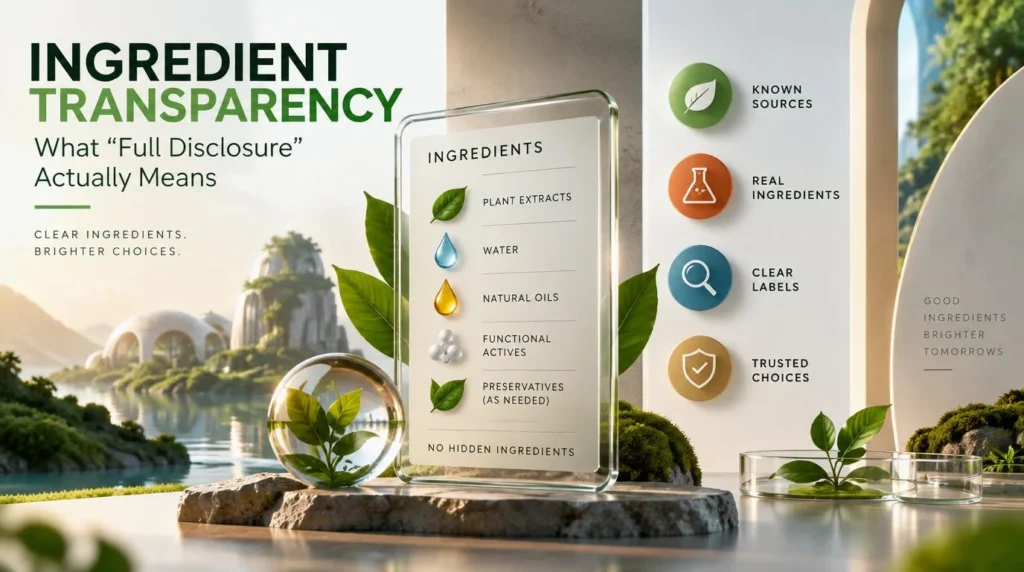
Ingredient Transparency: What “Full Disclosure” Actually Means
What "full ingredient disclosure" means, why a proprietary blend caps our transparency check, and how to spot the difference on a real label.
Disclosure: DigiproSpark may earn a commission if you buy through links on this page, at no extra cost to you. It does not affect our evaluation. Educational content only; not medical advice. See our affiliate disclosure and medical disclaimer.
Every supplement label makes two very different kinds of promise: “this ingredient is in here” and “here’s exactly how much.” Only the second one lets you evaluate whether a product can plausibly do what it claims. This is the first of our 5-Point Quality Filter checks, and it’s the one most proprietary-blend products fail before we even get to the science.
Fully disclosed vs. proprietary blend
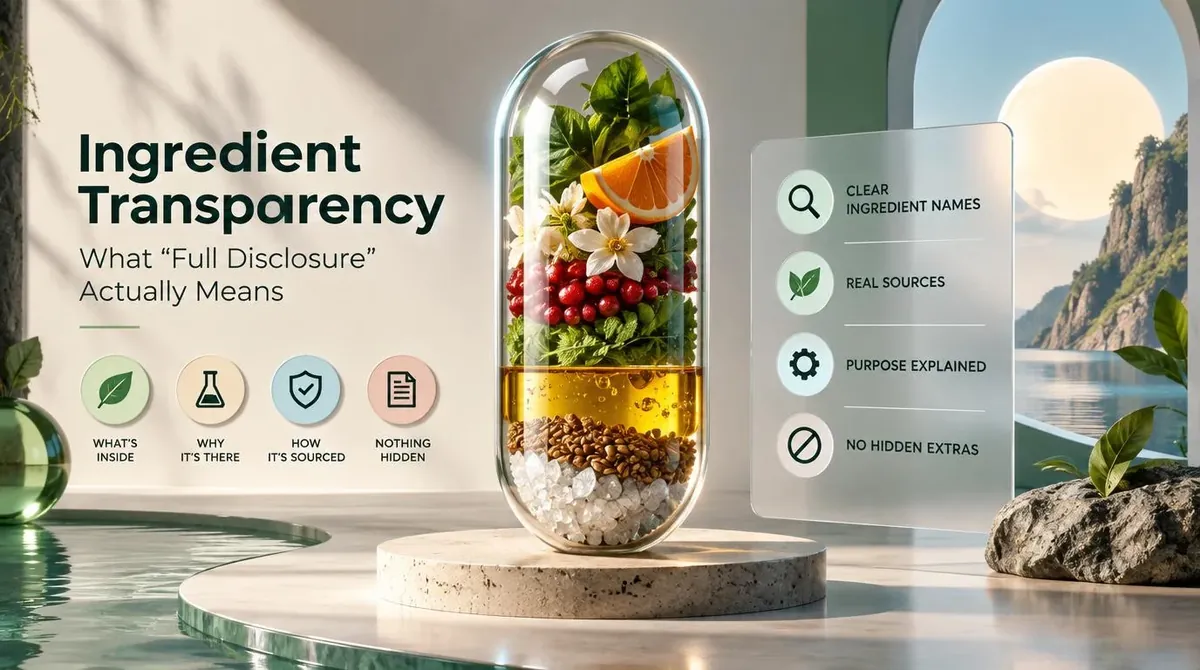
A fully disclosed label states a specific amount, milligrams, micrograms, CFU count, next to every ingredient. A proprietary blend lists the ingredients but gives only one combined total for the whole group, so no one, including us, can state a single ingredient’s actual dose without a lab test. Both are legal, the FDA’s own ingredient-labeling rules govern common names and declaration order, not disclosure of individual amounts inside a blend. Only one lets a reader (or a reviewer) check the amount against the research.
Why this check comes first
Dosing, evidence, and value all depend on knowing what’s actually in the product. A formula can list impressive-sounding ingredients and still fail this check entirely if the amounts are hidden: which is exactly why we score ingredient transparency before asking whether the ingredients themselves have good research behind them. See Proprietary Blends Explained for the deeper mechanics of why blends exist and what they hide.
What we also check here
- Sourcing. Is the ingredient form specified (e.g., a named patented extract vs. a generic name)? A specific, named form is easier to verify against research than a generic one.
- Common allergens. Are major allergens and the manufacturing facility’s allergen policy stated?
- Reason to be there. Does each active have a plausible reason for inclusion, or does the formula pad the label with ingredients at doses too small to matter (informally, “fairy dusting”)?
See it applied
Our Nagano Lean Body Tonic review and Java Burn review both transcribe the full printed Supplement Facts label, including exactly which parts are disclosed and which sit inside a proprietary blend, so you can see this check applied to a real product, not just described in the abstract.
Educational content only, not medical advice.
References
- NIH Office of Dietary Supplements: ods.od.nih.gov
- U.S. FDA, Dietary Supplement Labeling Guide, fda.gov/food/dietary-supplements
- Google Search, Write high-quality product reviews, developers.google.com
Enjoying our content? Add us as a preferred source on Google.
Add us as a preferred source on GoogleDisclosures
Medical disclaimer
The statements on this page have not been evaluated by the Food and Drug Administration. This product is not intended to diagnose, treat, cure, or prevent any disease. Content is for educational and informational purposes only. Always consult a qualified healthcare professional before starting any new supplement.
Who wrote this
We are not doctors. We are independent researchers who spend dozens of hours analyzing peer-reviewed clinical trials so you don't have to. Every claim on this page is scored against our 5-Point Quality Filter and linked to its source.
Affiliate disclosure
DigiproSpark may earn a commission from purchases made through the affiliate links on this page at no additional cost to you. We only recommend products that pass our 5-Point Quality Filter. Our editorial opinions are not influenced by compensation.

About the author
Satwasheel Gharde
Founder & Head of Research, DigiproSpark
Founder of Smiley Social and Head of Research at DigiproSpark. Personally researches and edits every supplement review here using the 5-Point Quality Filter: transcribing the printed Supplement Facts label, sourcing peer-reviewed human evidence (PubMed / PMC / NIH), and checking clinical dosing before any verdict. Our reviews are evidence-and-label analyses, not medical advice; material safety points (drug interactions, contraindications) are written conservatively and flagged for a qualified clinician or pharmacist to confirm. Conflict-of-interest: pages may contain affiliate links that can earn a commission, which never changes a rating. Corrections & editorial contact: smileysocial@digiprospark.com.
Last updated: October 21, 2026