Ingredient science
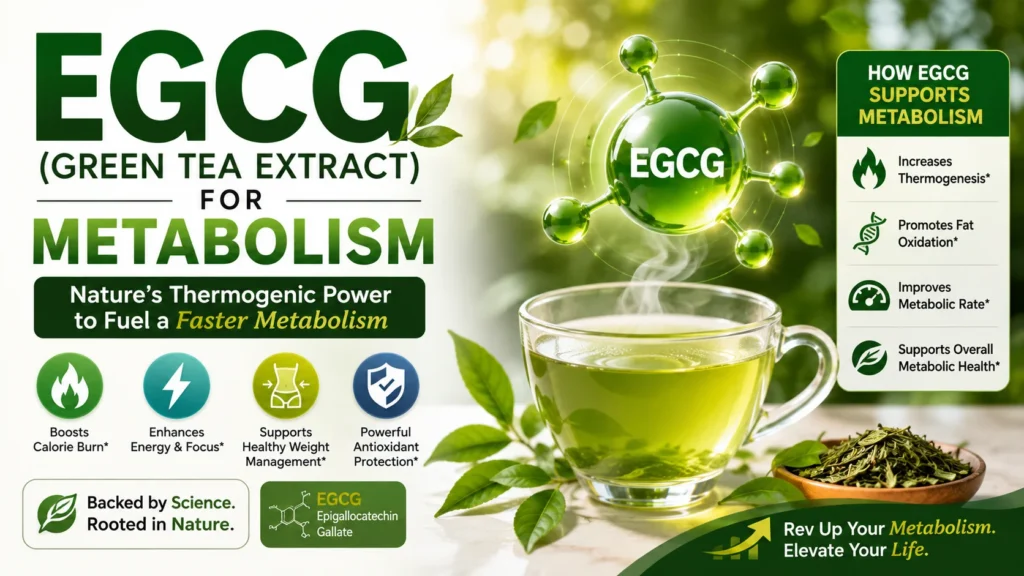
EGCG (Green Tea Extract) for Metabolism: What the Evidence Actually Shows
EGCG (epigallocatechin gallate) is the main catechin in green tea extract, and it shows up as a named active in two of our reviews, Nagano Lean Body Tonic and Java Burn, both inside proprietary blends that don't disclose how much EGCG you're actually getting. This page gives the ingredient the deeper, dose-specific treatment a single product review doesn't have room for: what the human research actually shows, at what doses, and a real safety ceiling worth knowing about that most sales pages don't mention.
Disclosure: DigiproSpark may earn a commission if you buy through links on this page, at no extra cost to you. It does not affect our evaluation. Educational content only; not medical advice. See our affiliate disclosure and medical disclaimer.
Watch
Video Walkthrough
The evidence
What the human research shows
The dose range that actually matters
Across human studies, EGCG intake has ranged from about 30mg to as high as 4,000mg per day depending on whether it came from tea, green tea extract, or purified EGCG supplements. For context, a typical cup of brewed green tea provides roughly 90-300mg of EGCG, some studies estimate heavy tea drinkers can reach up to ~866mg/day from beverages alone. Neither Nagano nor Java Burn discloses the actual EGCG amount in their proprietary blends: which means neither product can be confirmed to reach the doses used in the research above, or to fall safely under the ceiling described next.
The safety ceiling most pages don't mention
This is the part worth knowing before assuming "more is better." Regulatory safety reviews have established an acceptable daily intake around 322mg/day for supplemental EGCG, and clinical trial data shows that supplemental doses at or above roughly 800mg/day have been associated with a statistically significant increase in liver enzymes (transaminases) in treated subjects, compared to control groups, see the NIH ODS weight-loss supplement fact sheet for green tea extract's broader safety and evidence summary. This risk is specific to concentrated supplement doses, brewed green tea infusions, even in heavy drinkers, have not shown the same signal. If you're combining a green-tea-containing supplement with brewed tea or matcha, the doses can add up in a way that's easy to lose track of.
How this applies to Nagano and Java Burn
Both Nagano Lean Body Tonic and Java Burn list green tea extract as an active ingredient inside a proprietary blend, meaning the EGCG amount in either product is unknown. That cuts both ways: you can't confirm you're getting a dose large enough to match the modest effects seen in research, but you also can't confirm you're anywhere near the ~800mg/day level where the liver-enzyme signal starts to appear. In practice, most commercial green tea extract supplements are formulated well under that ceiling, but "most" isn't "confirmed," which is exactly the transparency gap our 5-Point Quality Filter scores both products down for.
If you already drink green tea or matcha regularly and are considering either product, that's worth factoring in, not because trace EGCG stacking is dangerous, but because it's the kind of detail an undisclosed-dose label makes impossible to calculate precisely.
Enjoying our content? Add us as a preferred source on Google.
Add us as a preferred source on GoogleDisclosures
Medical disclaimer
This content is for educational purposes only and is not medical advice. It has not been evaluated by the FDA and is not intended to diagnose, treat, cure or prevent any disease. Consult a qualified healthcare professional before starting any supplement.
Who wrote this
We are not doctors. We are independent researchers who spend dozens of hours analyzing peer-reviewed clinical trials so you don't have to. Every claim on this page is scored against our 5-Point Quality Filter and linked to its source.
Affiliate disclosure
DigiproSpark may earn a commission from purchases made through affiliate links on this page at no extra cost to you. It does not change our editorial opinions.

About the author
Satwasheel Gharde
Founder & Head of Research, DigiproSpark
Founder of Smiley Social and Head of Research at DigiproSpark. Personally researches and edits every supplement review here using the 5-Point Quality Filter: transcribing the printed Supplement Facts label, sourcing peer-reviewed human evidence (PubMed / PMC / NIH), and checking clinical dosing before any verdict. Our reviews are evidence-and-label analyses, not medical advice; material safety points (drug interactions, contraindications) are written conservatively and flagged for a qualified clinician or pharmacist to confirm. Conflict-of-interest: pages may contain affiliate links that can earn a commission, which never changes a rating. Corrections & editorial contact: smileysocial@digiprospark.com.
Author of 17 published product reviews on DigiproSpark, each researched under the 5-Point Quality Filter. See the methodology →
Last updated: August 2, 2026