How-To Guides
Safety & Interactions: What We Check Before Any Product Passes
What our safety check covers, why it can cap a verdict regardless of other scores, and why we flag interaction risks for a clinician rather than clear them ourselves.
Disclosure: DigiproSpark may earn a commission if you buy through links on this page, at no extra cost to you. It does not affect our evaluation. Educational content only; not medical advice. See our affiliate disclosure and medical disclaimer.
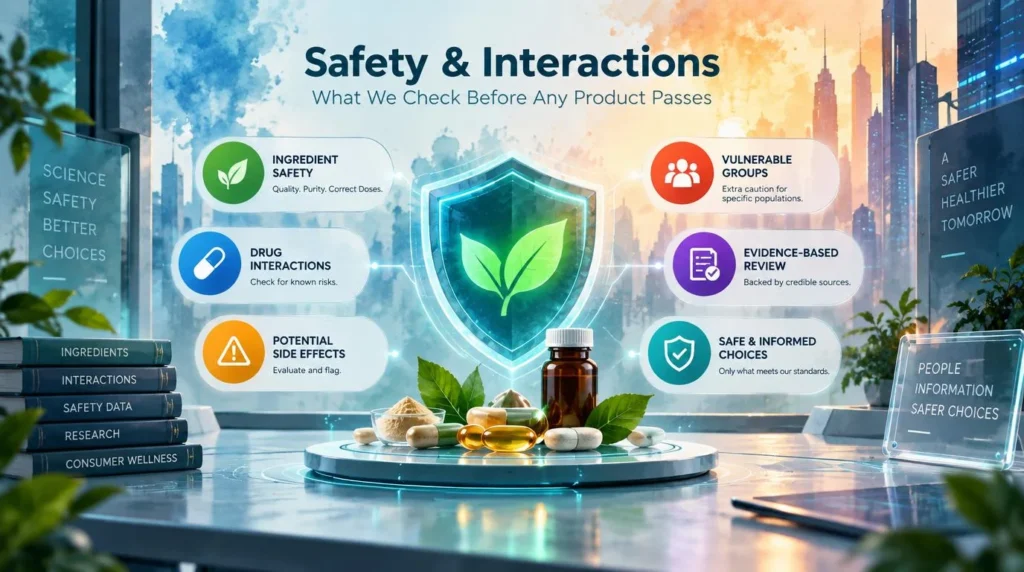
A product can have a transparent label, clinically-dosed actives, and solid evidence: and still hold back a recommendation if it carries a real safety question. This is the fourth of our 5-Point Quality Filter checks, and it’s a hard stop, not a tiebreaker: a serious unresolved safety concern caps a verdict regardless of how well a product scores elsewhere.
What we look for on every review
- Known side effects. Documented reactions reported for the ingredient or the product, including mild and common ones, not just rare severe ones.
- Drug interactions. Whether any labeled ingredient is known to interact with common medication classes: most often blood thinners, blood pressure medication, blood sugar medication, and thyroid medication.
- Stimulant load. Total caffeine or stimulant content, stated precisely rather than described vaguely as “stimulant-free” when trace amounts are actually present.
- Who should avoid it. Pregnancy, nursing, age restrictions, and specific health conditions that warrant caution or exclusion.
We are not doctors: and we say so
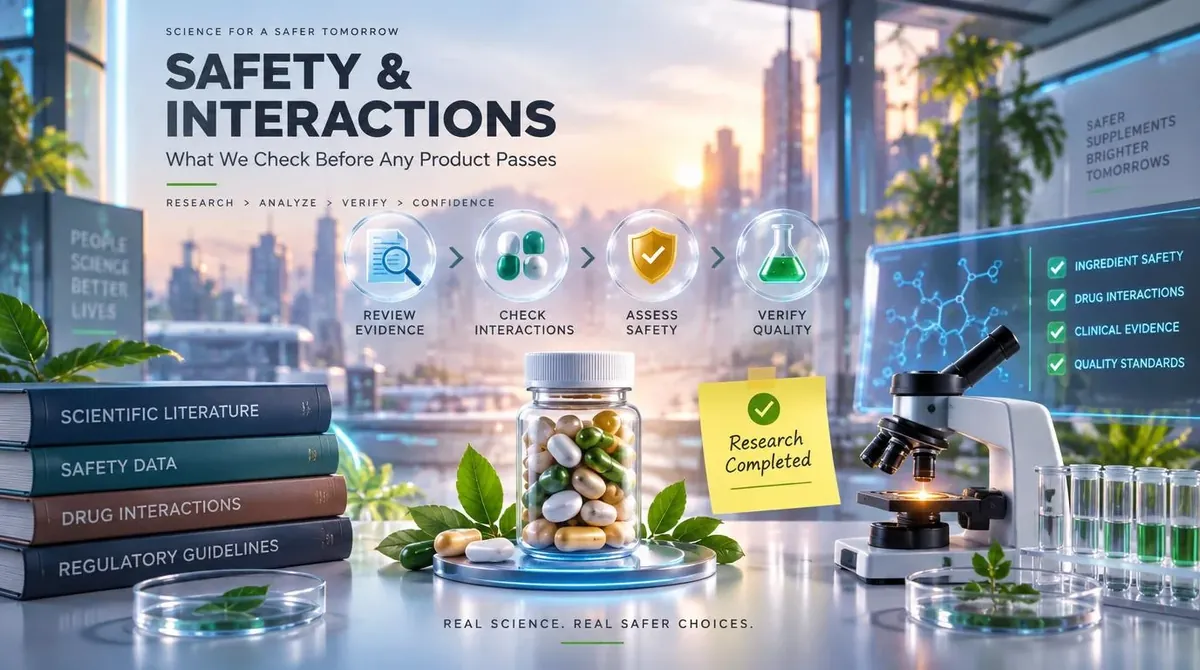
DigiproSpark’s safety checks are a research-desk review of publicly available label and drug-interaction information, not a personalized medical assessment. When a review says a safety point is “flagged for a qualified clinician or pharmacist to confirm,” that’s an honest statement of our limits, not a formality: a real interaction risk deserves a conversation with someone licensed to evaluate your specific health history and current medications, not just a product review.
Why vague safety language isn’t good enough

“Generally well-tolerated” and “no known side effects” are marketing phrases, not safety data: the second one is usually just an admission that no one has looked. We aim for specific, sourced statements instead: which ingredient, what interaction, at what kind of dose, according to which source. See our Safety Guides for ingredient-specific interaction write-ups.
See it applied
Our Nagano Lean Body Tonic review states exactly which medication classes warrant a clinician check before use, and is explicit about caffeine content rather than relying on the brand’s own “stimulant-free” framing.
Educational content only, not medical advice. Always consult a qualified healthcare professional before starting any new supplement, especially if you take medication or have an existing health condition.
References
- NIH Office of Dietary Supplements: ods.od.nih.gov
- U.S. FDA: Dietary Supplements fda.gov/food/dietary-supplements
- MedlinePlus, Drugs, Herbs and Supplements, medlineplus.gov
Enjoying our content? Add us as a preferred source on Google.
Add us as a preferred source on GoogleDisclosures
Medical disclaimer
The statements on this page have not been evaluated by the Food and Drug Administration. This product is not intended to diagnose, treat, cure, or prevent any disease. Content is for educational and informational purposes only. Always consult a qualified healthcare professional before starting any new supplement.
Who wrote this
We are not doctors. We are independent researchers who spend dozens of hours analyzing peer-reviewed clinical trials so you don't have to. Every claim on this page is scored against our 5-Point Quality Filter and linked to its source.
Affiliate disclosure
DigiproSpark may earn a commission from purchases made through the affiliate links on this page at no additional cost to you. We only recommend products that pass our 5-Point Quality Filter. Our editorial opinions are not influenced by compensation.

About the author
Satwasheel Gharde
Founder & Head of Research, DigiproSpark
Founder of Smiley Social and Head of Research at DigiproSpark. Personally researches and edits every supplement review here using the 5-Point Quality Filter: transcribing the printed Supplement Facts label, sourcing peer-reviewed human evidence (PubMed / PMC / NIH), and checking clinical dosing before any verdict. Our reviews are evidence-and-label analyses, not medical advice; material safety points (drug interactions, contraindications) are written conservatively and flagged for a qualified clinician or pharmacist to confirm. Conflict-of-interest: pages may contain affiliate links that can earn a commission, which never changes a rating. Corrections & editorial contact: smileysocial@digiprospark.com.
Last updated: October 21, 2026