Lifestyle Foundations
Sleep and Insulin Sensitivity: What the Real Research Shows
Real, cited research connecting sleep duration to insulin sensitivity, and why a blood-sugar or weight-management routine is working against a real headwind if sleep is ignored.
Disclosure: DigiproSpark may earn a commission if you buy through links on this page, at no extra cost to you. It does not affect our evaluation. Educational content only; not medical advice. See our affiliate disclosure and medical disclaimer.
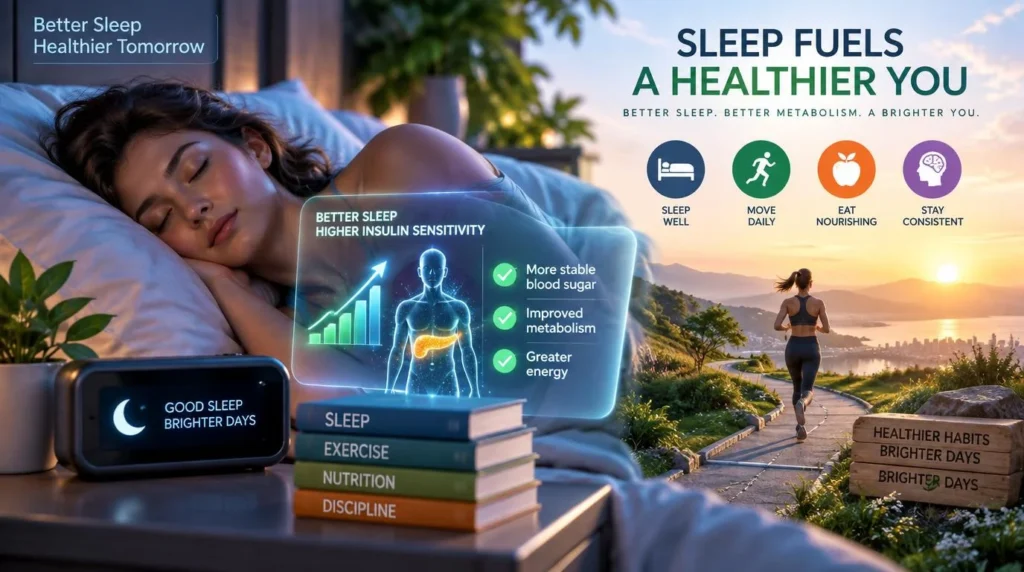
Sleep isn’t a soft, secondary wellness factor when it comes to blood sugar. It has a real, measured relationship with how sensitive your body is to insulin, independent of anything you’re taking.
The real research

The EGIR-RISC cohort study (Rutters et al., 2016) found sleep duration is associated with insulin sensitivity and beta-cell function in a sex-specific way, in a large sample of otherwise healthy adults. A separate analysis identified roughly 7 hours 19 minutes as the sleep duration associated with the best measured insulin sensitivity, with both shorter and, to a lesser extent, longer sleep associated with worse numbers. Multiple other cohort and experimental studies converge on the same broad pattern: short, chronic sleep restriction is linked to impaired glucose metabolism, increased hunger signaling, and weight gain over time.
There’s also a genuinely encouraging finding: even short-term “catch-up” sleep, just a few nights of real sleep extension, has been shown to partially restore insulin sensitivity in men who’d been chronically sleep-restricted.
What this means if you’re evaluating a Blood Sugar or Weight Management product
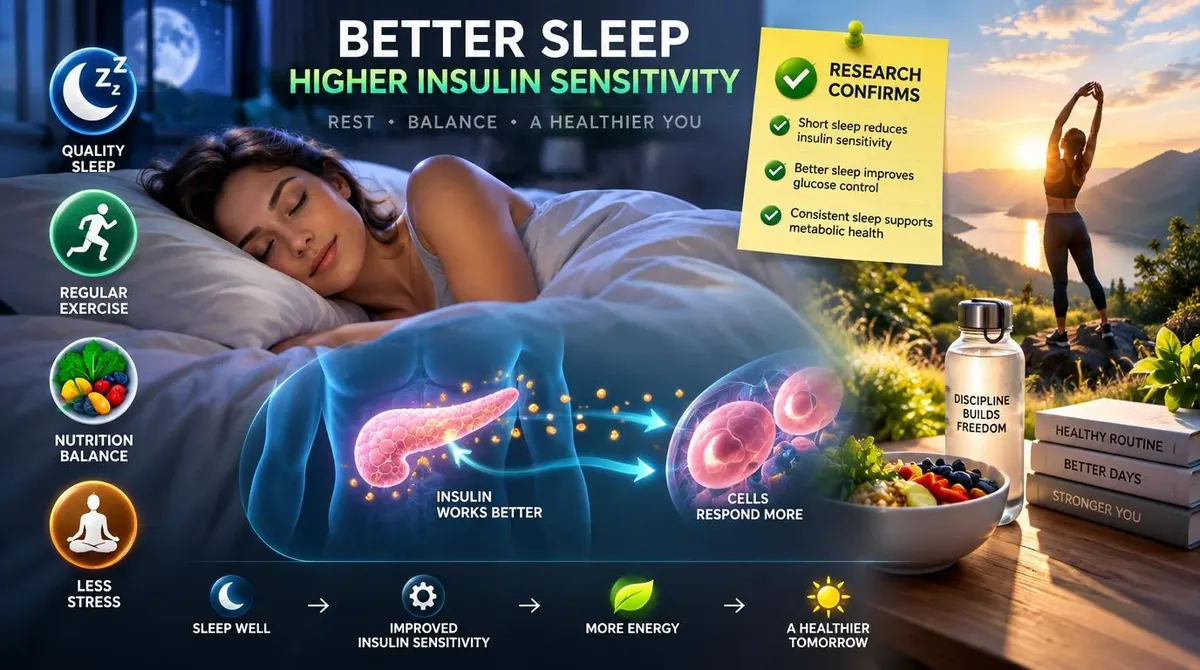
If you’re chronically sleeping under 6-7 hours and considering a product from our Blood Sugar or Weight Management category, the sleep deficit itself is working against the exact system (insulin sensitivity) those products are marketed toward. This isn’t a claim that any specific product performs differently with more sleep, that pairing hasn’t been studied, it’s that sleep is an independently real, measured lever on the same underlying biology.
FAQ
How much sleep is actually linked to the best insulin sensitivity?
One study identified roughly 7 hours 19 minutes as associated with the best measured insulin sensitivity in its sample; the broader, consistent finding across studies is that chronic short sleep (well under 7 hours) is linked to worse glucose metabolism.
Can catching up on sleep help after a bad stretch?
A controlled study found a few nights of real sleep extension improved insulin sensitivity in men with chronic sleep restriction, a genuinely real, if partial, recovery effect.
Educational content only, not medical advice. Consult a qualified healthcare professional about your sleep and blood sugar, especially if you have diabetes or a diagnosed sleep disorder.
Enjoying our content? Add us as a preferred source on Google.
Add us as a preferred source on GoogleDisclosures
Medical disclaimer
The statements on this page have not been evaluated by the Food and Drug Administration. This product is not intended to diagnose, treat, cure, or prevent any disease. Content is for educational and informational purposes only. Always consult a qualified healthcare professional before starting any new supplement.
Who wrote this
We are not doctors. We are independent researchers who spend dozens of hours analyzing peer-reviewed clinical trials so you don't have to. Every claim on this page is scored against our 5-Point Quality Filter and linked to its source.
Affiliate disclosure
DigiproSpark may earn a commission from purchases made through the affiliate links on this page at no additional cost to you. We only recommend products that pass our 5-Point Quality Filter. Our editorial opinions are not influenced by compensation.

About the author
Satwasheel Gharde
Founder & Head of Research, DigiproSpark
Founder of Smiley Social and Head of Research at DigiproSpark. Personally researches and edits every supplement review here using the 5-Point Quality Filter: transcribing the printed Supplement Facts label, sourcing peer-reviewed human evidence (PubMed / PMC / NIH), and checking clinical dosing before any verdict. Our reviews are evidence-and-label analyses, not medical advice; material safety points (drug interactions, contraindications) are written conservatively and flagged for a qualified clinician or pharmacist to confirm. Conflict-of-interest: pages may contain affiliate links that can earn a commission, which never changes a rating. Corrections & editorial contact: smileysocial@digiprospark.com.
Last updated: October 19, 2026