Ingredient science
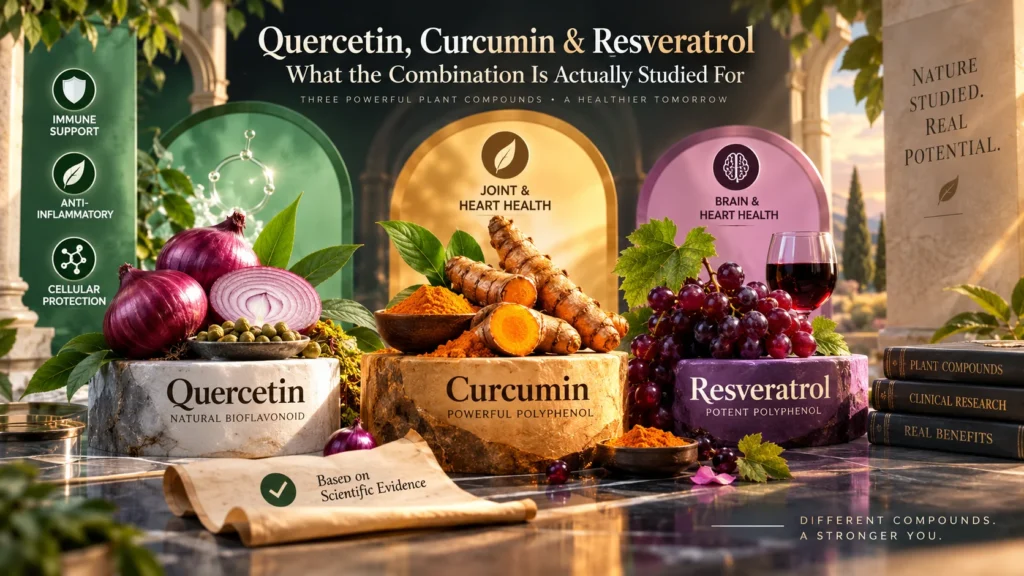
Quercetin, Curcumin & Resveratrol: What the Combination Is Actually Studied For
Quercetin, curcumin and resveratrol are three of the most commonly co-marketed antioxidants in the supplement industry. Our TonicGreens review covers one product built around this exact trio, this page goes deeper into what the real clinical trial data on this specific combination actually studied.
Disclosure: DigiproSpark may earn a commission if you buy through links on this page, at no extra cost to you. It does not affect our evaluation. Educational content only; not medical advice. See our affiliate disclosure and medical disclaimer.
Watch
Video Walkthrough
The evidence
What the real research on this combination shows
The marketing gap: "antioxidant support" vs. what was actually studied
This is one of the clearest examples of a real research-to-marketing gap in the supplement industry. When a greens powder or immune supplement lists "quercetin, curcumin and resveratrol" and implies general antioxidant or immune benefits, it's usually leaning on each ingredient's broad reputation individually, anti-inflammatory, antioxidant, "cardiovascular support", rather than citing what happens when this exact combination has actually been tested together in humans.
The real answer is more specific and, honestly, more interesting: the combination's strongest human clinical trial data is for age-related macular degeneration, an eye condition affecting the retina, the same territory covered by the NIH's own AREDS/AREDS2 studies, though those specific trials used a different antioxidant-vitamin-mineral formulation, not this exact quercetin-curcumin-resveratrol combination. That's still genuine, positive, published evidence, it just doesn't automatically transfer to "boosts your immune system" or "fights inflammation everywhere in your body," which is how this trio is usually marketed in products like greens powders.
Why the bioavailability finding still matters
Curcumin has one of the best-documented bioavailability problems in supplement science, taken alone, very little of it actually reaches the bloodstream intact, which is why so many curcumin products are marketed with an absorption-enhancer (black pepper extract/piperine is the most common). The finding that quercetin can boost curcumin's intestinal concentration roughly seven-fold when combined is a genuine, useful piece of formulation science, it helps explain part of why this specific trio might behave differently in the body than curcumin alone would.
That said, a bioavailability finding describes absorption, not a proven health outcome on its own, it's a real mechanistic piece of the puzzle, not a substitute for the RQC combination's own actual clinical trial data (which, again, was for eye health specifically).
Where this applies to TonicGreens
TonicGreens includes quercetin, curcumin and resveratrol inside its Antioxidant blend, alongside other ingredients: but like its other three blends, only a combined total is disclosed, not the individual amount of any one ingredient, so the exact doses actually in the product are unknown to us and, functionally, to any buyer reading the label alone.
See our full TonicGreens review for how this evidence applies to one specific product, including the real trial-to-marketing mismatch we found and our full Trust Score calculation.
Enjoying our content? Add us as a preferred source on Google.
Add us as a preferred source on GoogleDisclosures
Medical disclaimer
This content is for educational purposes only and is not medical advice. It has not been evaluated by the FDA and is not intended to diagnose, treat, cure or prevent any disease. Consult a qualified healthcare professional before starting any supplement.
Who wrote this
We are not doctors. We are independent researchers who spend dozens of hours analyzing peer-reviewed clinical trials so you don't have to. Every claim on this page is scored against our 5-Point Quality Filter and linked to its source.
Affiliate disclosure
DigiproSpark may earn a commission from purchases made through affiliate links on this page at no extra cost to you. It does not change our editorial opinions.

About the author
Satwasheel Gharde
Founder & Head of Research, DigiproSpark
Founder of Smiley Social and Head of Research at DigiproSpark. Personally researches and edits every supplement review here using the 5-Point Quality Filter: transcribing the printed Supplement Facts label, sourcing peer-reviewed human evidence (PubMed / PMC / NIH), and checking clinical dosing before any verdict. Our reviews are evidence-and-label analyses, not medical advice; material safety points (drug interactions, contraindications) are written conservatively and flagged for a qualified clinician or pharmacist to confirm. Conflict-of-interest: pages may contain affiliate links that can earn a commission, which never changes a rating. Corrections & editorial contact: smileysocial@digiprospark.com.
Author of 17 published product reviews on DigiproSpark, each researched under the 5-Point Quality Filter. See the methodology →
Last updated: October 21, 2026