Ingredient science
Moringa Oleifera Health Benefits: What the Full 2025 Evidence Actually Shows
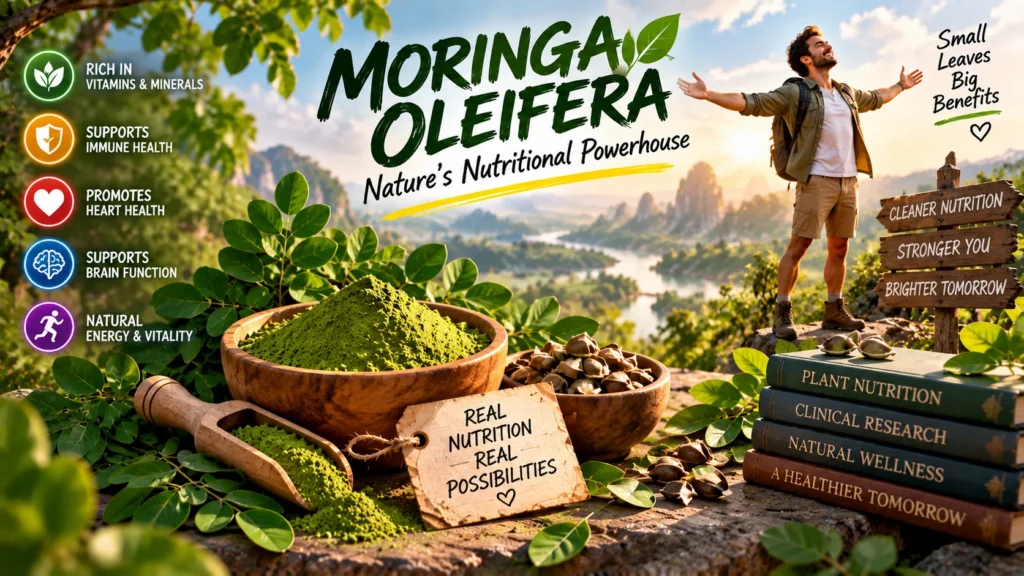
"Superfood" is a marketing word, not a scientific one. Our Moringa Magic review covers one specific product, this page goes deeper into what real 2025 human research on moringa oleifera itself actually shows: including a rigorous new meta-analysis that paints a more cautious picture than most sales pages suggest.
Disclosure: DigiproSpark may earn a commission if you buy through links on this page, at no extra cost to you. It does not affect our evaluation. Educational content only; not medical advice. See our affiliate disclosure and medical disclaimer.
Watch
Video Walkthrough
The evidence
What the 2025 research actually shows
The dose question most marketing skips
The clearest positive human trial for moringa oleifera and blood sugar used 10 grams of leaf powder per day, a meaningfully large dose, well above what a typical 2-capsule daily serving delivers. Most capsule-based moringa products, including the one we reviewed, appear to deliver a small fraction of that amount. A real clinical trial at one dose does not predict what a much smaller dose in a capsule will do, this is one of the most common, checkable gaps between a supplement's marketing and the research it cites, and it applies just as much to moringa as it does to any other ingredient sold in an under-dosed capsule form.
This isn't unique to any one brand, it's a structural feature of how "backed by science" claims often work in the supplement industry: the underlying ingredient has real research, but the finished product's actual dose is rarely disclosed clearly enough for a buyer to check it against that research themselves.
Why the newest meta-analysis matters more than any single trial
Individual small trials on moringa oleifera have reported encouraging results for blood sugar, cholesterol and blood pressure, but individual small trials, especially unblinded ones, are exactly the kind of evidence a meta-analysis exists to stress-test. The 2025 meta-analysis pooled the available randomized controlled trial data and concluded the evidence for consistent cardiometabolic benefit is not yet strong enough to draw firm conclusions, explicitly calling for larger, better-designed studies. That's a genuinely more cautious verdict than reading any single positive trial in isolation would suggest, and it's the kind of finding that responsible, evidence-first coverage should lead with, not bury.
This doesn't mean moringa oleifera "doesn't work", it means the current totality of evidence doesn't yet support strong, specific claims about reliable cardiometabolic benefits at typical supplement doses. That's a meaningfully different, more honest statement than most marketing copy for this ingredient makes.
Safety and real interaction risks
A 2023 published toxicology review found moringa leaf material safe at intakes up to roughly 8 grams per day for 6 months in the studies it covered, a reassuring general safety profile. Two specific, checkable interaction risks are worth knowing regardless of which moringa product you're considering: moringa leaf is a source of Vitamin K, which directly counteracts how warfarin (a blood thinner) works, per the NIH Office of Dietary Supplements' Vitamin K fact sheet, and some sources note moringa may affect absorption of thyroid medication like levothyroxine. Neither is a reason to avoid moringa outright, both are reasons to talk to your prescriber first if either applies to you.
See our full Moringa Magic review for how this evidence applies to one specific product, including the exact dose gap we found and our full Trust Score calculation.
Enjoying our content? Add us as a preferred source on Google.
Add us as a preferred source on GoogleDisclosures
Medical disclaimer
This content is for educational purposes only and is not medical advice. It has not been evaluated by the FDA and is not intended to diagnose, treat, cure or prevent any disease. Consult a qualified healthcare professional before starting any supplement.
Who wrote this
We are not doctors. We are independent researchers who spend dozens of hours analyzing peer-reviewed clinical trials so you don't have to. Every claim on this page is scored against our 5-Point Quality Filter and linked to its source.
Affiliate disclosure
DigiproSpark may earn a commission from purchases made through affiliate links on this page at no extra cost to you. It does not change our editorial opinions.

About the author
Satwasheel Gharde
Founder & Head of Research, DigiproSpark
Founder of Smiley Social and Head of Research at DigiproSpark. Personally researches and edits every supplement review here using the 5-Point Quality Filter: transcribing the printed Supplement Facts label, sourcing peer-reviewed human evidence (PubMed / PMC / NIH), and checking clinical dosing before any verdict. Our reviews are evidence-and-label analyses, not medical advice; material safety points (drug interactions, contraindications) are written conservatively and flagged for a qualified clinician or pharmacist to confirm. Conflict-of-interest: pages may contain affiliate links that can earn a commission, which never changes a rating. Corrections & editorial contact: smileysocial@digiprospark.com.
Author of 17 published product reviews on DigiproSpark, each researched under the 5-Point Quality Filter. See the methodology →
Last updated: August 2, 2026