Ingredient science
Camu Camu and Acerola for Vitamin C: Does “Natural” Actually Absorb Better?
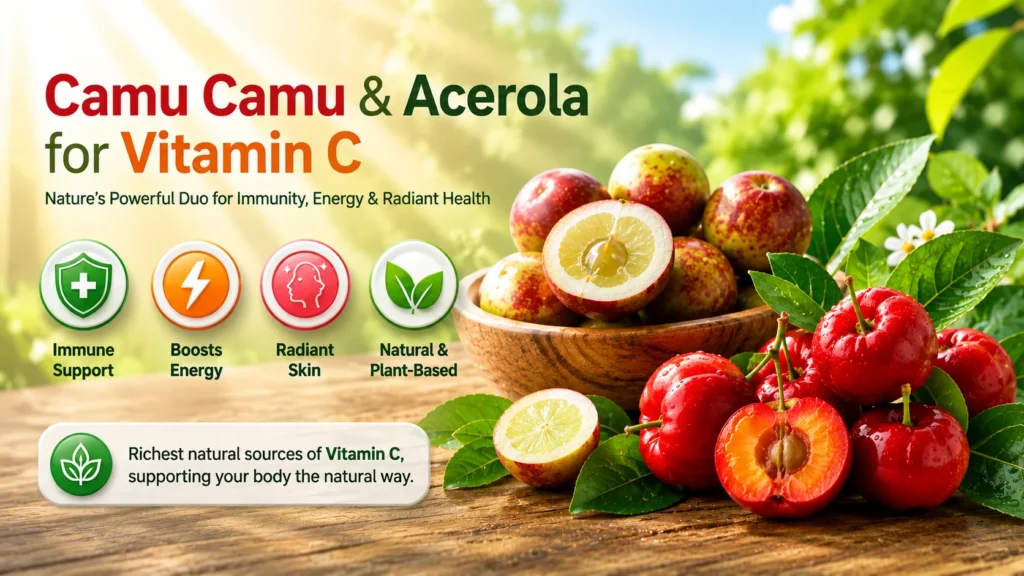
Acerola and camu camu are two vitamin-C-rich fruits used as "natural" vitamin C sources in supplements, including Nagano Lean Body Tonic, whose label discloses 75mg (83% DV) of vitamin C from acerola and camu camu: one of the few individually-dosed ingredients on Nagano's label. This page covers the actual research behind a common marketing claim: that "natural" vitamin C sources absorb better than plain synthetic ascorbic acid.
Disclosure: DigiproSpark may earn a commission if you buy through links on this page, at no extra cost to you. It does not affect our evaluation. Educational content only; not medical advice. See our affiliate disclosure and medical disclaimer.
Watch
Video Walkthrough
The evidence
What the bioavailability research actually shows
Why the "natural absorbs better" claim is more marketing than settled science
Vitamin C (ascorbic acid) is the same molecule whether it's extracted from acerola, camu camu, or synthesized: the body's absorption machinery doesn't distinguish the source of ascorbic acid itself. The theoretical case for a whole-food source is that accompanying compounds (flavonoids, bioflavonoids) might increase uptake or retention. The actual controlled research on that theory is thin and inconsistent: one small study found a modest retention benefit from acerola specifically, a separate, better-controlled crossover study using a different fruit source found no bioavailability difference at all. That's a genuinely unsettled question, not a proven advantage. See the NIH ODS vitamin C fact sheet for absorption, daily-requirement, and upper-limit background.
What camu camu and acerola DO add beyond vitamin C
Camu camu is genuinely one of the most vitamin-C-dense fruits known (far higher concentration per gram than citrus), and both fruits carry additional plant compounds (anthocyanins, other flavonoids) beyond ascorbic acid itself: real nutritional content, independent of the absorption-advantage question. The honest framing is: acerola and camu camu are a legitimate, whole-food-derived vitamin C source with genuine trace nutrients beyond vitamin C, but the specific claim that this makes the vitamin C itself absorb meaningfully better than a synthetic source isn't well established by controlled research.
Where this leaves a product like Nagano
Nagano's vitamin C dose (75mg, 83% DV) is genuinely disclosed on the label, a real transparency plus, unlike most of the rest of Nagano's Herbs & Extracts and greens blends. See our full Nagano Lean Body Tonic review for the complete ingredient-by-ingredient breakdown. Whether sourcing that vitamin C from acerola/camu camu specifically confers a meaningful absorption advantage over a cheaper synthetic source is an open, unsettled research question, a reasonable formulation choice, not a proven performance difference.
Enjoying our content? Add us as a preferred source on Google.
Add us as a preferred source on GoogleDisclosures
Medical disclaimer
This content is for educational purposes only and is not medical advice. It has not been evaluated by the FDA and is not intended to diagnose, treat, cure or prevent any disease. Consult a qualified healthcare professional before starting any supplement.
Who wrote this
We are not doctors. We are independent researchers who spend dozens of hours analyzing peer-reviewed clinical trials so you don't have to. Every claim on this page is scored against our 5-Point Quality Filter and linked to its source.
Affiliate disclosure
DigiproSpark may earn a commission from purchases made through affiliate links on this page at no extra cost to you. It does not change our editorial opinions.

About the author
Satwasheel Gharde
Founder & Head of Research, DigiproSpark
Founder of Smiley Social and Head of Research at DigiproSpark. Personally researches and edits every supplement review here using the 5-Point Quality Filter: transcribing the printed Supplement Facts label, sourcing peer-reviewed human evidence (PubMed / PMC / NIH), and checking clinical dosing before any verdict. Our reviews are evidence-and-label analyses, not medical advice; material safety points (drug interactions, contraindications) are written conservatively and flagged for a qualified clinician or pharmacist to confirm. Conflict-of-interest: pages may contain affiliate links that can earn a commission, which never changes a rating. Corrections & editorial contact: smileysocial@digiprospark.com.
Author of 17 published product reviews on DigiproSpark, each researched under the 5-Point Quality Filter. See the methodology →
Last updated: October 21, 2026