
Energy & Superfoods
Post-Workout Nutrition Guide: What the Evidence Actually Supports
What actually happens to your muscles after exercise, what the research supports on protein, carbs and timing, and where a supplement honestly fits.
Disclosure: DigiproSpark may earn a commission if you buy through links on this page, at no extra cost to you. It does not affect our evaluation. Educational content only; not medical advice. See our affiliate disclosure and medical disclaimer.
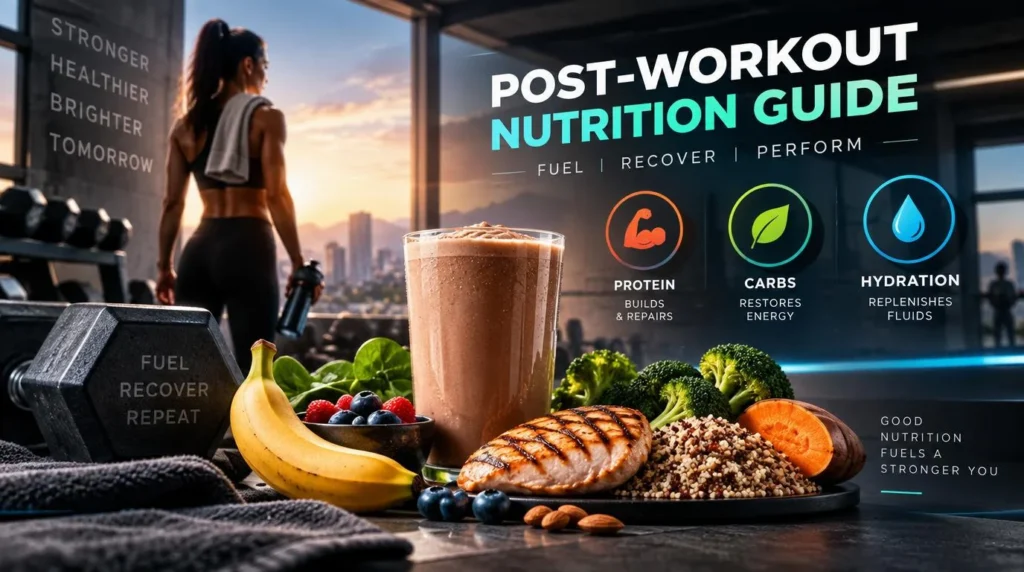
After a hard training session, what you eat next genuinely affects how you recover: but the ’30-minute anabolic window’ framing most articles use is more rigid than the actual research. Here’s what the evidence supports.
What happens in your muscles after exercise
Intense exercise depletes glycogen (your muscles’ stored fuel) and causes small amounts of muscle protein breakdown. The nutrients you eat afterward influence how quickly glycogen is restored and how effectively muscle protein synthesis outpaces that breakdown.
Protein: how much and when
Most research supports roughly 20-40g of quality protein every 3-4 hours to keep muscle protein synthesis elevated across the day. Eating protein within about two hours of a session is associated with a modest additional benefit, but the idea of a narrow 30-45 minute ‘window’ that closes has been walked back by more recent research: total daily protein intake and consistent spacing matter more than hitting an exact minute.
Carbohydrates: restoring glycogen
Carbohydrate needs after training depend heavily on training volume and goal. Endurance athletes training long or frequent sessions benefit most from prioritizing carb refeeding soon after exercise, someone doing a single moderate resistance session has more flexibility. Pairing carbs with protein post-workout is well-supported for speeding glycogen resynthesis compared to carbs alone.
Hydration

Fluid losses during exercise vary a lot by person, intensity, and climate. A practical approach: hydrate normally through the day, drink to thirst during training, and replace fluids afterward based on how much you sweat: weighing yourself before and after a session is a simple way to estimate fluid loss if you want to be precise.
Do you need a supplement, or does food work?
Whole foods cover post-workout nutrition needs for the large majority of people, a meal with lean protein and carbohydrates works as well as a shake, and is usually cheaper. A protein shake is a convenience tool for when a real meal isn’t practical soon after training, not a requirement for recovery. If you’re evaluating a metabolism or energy-support supplement as part of a broader routine, our Nagano Lean Body Tonic and Java Burn reviews cover what those products can and can’t substantiate, both are Conditional verdicts on our 5-Point Quality Filter, not a recovery-nutrition solution on their own.
If you manage blood sugar or take insulin

Post-workout carbohydrate intake affects blood glucose, and exercise itself changes insulin sensitivity for hours afterward. If you manage diabetes or take insulin, work with your care team on how to adjust timing and dosing around exercise: general post-workout nutrition advice isn’t a substitute for that guidance.
FAQ
Do I really need to eat within 30 minutes of a workout?
No. Current research supports a more flexible window of a few hours, especially if you ate a balanced meal before training. Consistent daily protein and carb intake matters more than hitting an exact post-workout minute.
Is a protein shake necessary after every workout?
No. A shake is a convenience option, not a requirement: a normal meal with protein and carbs works just as well if you can eat one within a few hours.
How much protein do I actually need per day?
Active adults generally benefit from more than the basic RDA, especially during a calorie deficit or when trying to build muscle: a common practical range cited in sports nutrition research is roughly 1.2-2.0g per kg of bodyweight per day, spread across meals. Individual needs vary, a registered dietitian can tailor this to you.
This article is for information only and is not medical advice. Consult a qualified healthcare professional or registered dietitian before changing your diet or supplement routine, especially if you manage a medical condition like diabetes.
References
- International Society of Sports Nutrition: position stand: nutrient timing, DOI:10.1186/s12970-017-0189-4
- NIH Office of Dietary Supplements, ods.od.nih.gov
Enjoying our content? Add us as a preferred source on Google.
Add us as a preferred source on GoogleDisclosures
Medical disclaimer
The statements on this page have not been evaluated by the Food and Drug Administration. This product is not intended to diagnose, treat, cure, or prevent any disease. Content is for educational and informational purposes only. Always consult a qualified healthcare professional before starting any new supplement.
Who wrote this
We are not doctors. We are independent researchers who spend dozens of hours analyzing peer-reviewed clinical trials so you don't have to. Every claim on this page is scored against our 5-Point Quality Filter and linked to its source.
Affiliate disclosure
DigiproSpark may earn a commission from purchases made through the affiliate links on this page at no additional cost to you. We only recommend products that pass our 5-Point Quality Filter. Our editorial opinions are not influenced by compensation.

About the author
Satwasheel Gharde
Founder & Head of Research, DigiproSpark
Founder of Smiley Social and Head of Research at DigiproSpark. Personally researches and edits every supplement review here using the 5-Point Quality Filter: transcribing the printed Supplement Facts label, sourcing peer-reviewed human evidence (PubMed / PMC / NIH), and checking clinical dosing before any verdict. Our reviews are evidence-and-label analyses, not medical advice; material safety points (drug interactions, contraindications) are written conservatively and flagged for a qualified clinician or pharmacist to confirm. Conflict-of-interest: pages may contain affiliate links that can earn a commission, which never changes a rating. Corrections & editorial contact: smileysocial@digiprospark.com.
Last updated: October 19, 2026