Energy & Superfoods
Moringa for Blood Sugar and Weight Loss: What the Real Evidence Shows
An honest look at moringa oleifera and blood sugar, cholesterol, and weight loss: including a 2025 meta-analysis that found the evidence inconsistent, not a reason to overclaim it.
Disclosure: DigiproSpark may earn a commission if you buy through links on this page, at no extra cost to you. It does not affect our evaluation. Educational content only; not medical advice. See our affiliate disclosure and medical disclaimer.
This page previously included publishing-workflow instructions (an “Elementor block plan,” SEO field notes) that leaked into the visible article: a production error, now removed. What follows is an honest look at what the real, recent research on moringa oleifera and metabolic health actually shows, drawn from the same verification work behind our full Moringa Magic review.
What moringa leaf actually contains
Moringa oleifera leaves are nutrient-dense: per USDA nutrient data, they supply notable amounts of vitamin A, vitamin C, calcium, potassium, and protein, along with polyphenols such as quercetin and chlorogenic acid that have antioxidant and anti-inflammatory activity in laboratory and human studies. That nutrient profile is well-established and not in dispute.
What the blood sugar research actually found: and its real limit
The strongest recent evidence is a 2025 randomized controlled trial in women with type 2 diabetes (Leone et al., PharmaNutrition 2025;31:100434), which found a marginally significant reduction in HbA1c, a standard blood sugar marker, after three months of taking 10 grams of moringa leaf powder per day. That is a real, published, dose-specific result. It is not evidence that a smaller dose, a different population, or a different form (capsules versus loose powder) produces the same effect.
A separate, more rigorous 2025 systematic review and meta-analysis of randomized controlled trials, pooling multiple studies rather than relying on one trial, concluded that current evidence does not consistently support broader cardiometabolic benefits (blood sugar, lipids, blood pressure combined) from moringa oleifera supplementation, and called for larger, better-designed trials before firmer conclusions can be drawn. When a single positive trial and a broader meta-analysis point in different directions, the meta-analysis is generally the more reliable read, that’s the honest weight of evidence here, not a reason to abandon interest in the ingredient.
Weight loss specifically: the evidence is thinner still
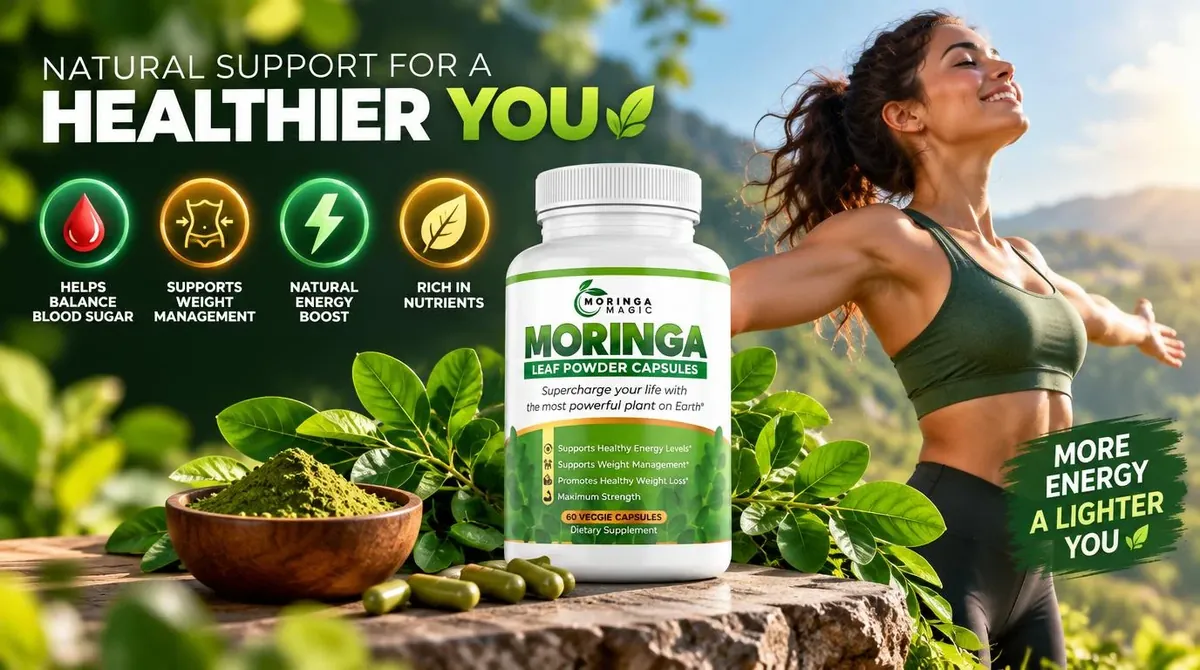
Most of the human trial data on moringa oleifera targets blood sugar and antioxidant markers, not body weight directly. Where weight-related outcomes have been studied, they are typically secondary measurements within trials designed around glycemic control, not dedicated weight-loss trials: and the 2025 meta-analysis’s inconsistent-evidence conclusion applies to this outcome too. Treat any claim that moringa is a weight-loss ingredient on its own as unproven rather than established.
Dose matters more than the ingredient name
The clinical trial with the clearest positive signal used 10 grams of leaf powder per day, a substantial serving, closer to a heaping tablespoon of powder than a typical two-capsule supplement dose. Many commercial moringa capsule products, including Moringa Magic per third-party retail listings, deliver roughly 800mg (0.8g) per day, about 1/12th of the studied amount. If you’re evaluating any moringa product for a blood-sugar-related goal, check its actual gram-per-day dose against that 10g benchmark rather than assuming the ingredient name alone guarantees the trial’s result.
Safety and who should check with a clinician first
Moringa leaf is a source of Vitamin K, which can directly interact with warfarin and other blood thinners. Because moringa has real, dose-dependent glycemic effects, anyone already taking blood-sugar-lowering medication should talk to their clinician before adding it, to avoid compounding effects. Some drug-interaction references also note a possible effect on thyroid medication (levothyroxine) absorption. Pregnant or nursing individuals, and anyone with a liver or kidney condition, should get personalized clinical guidance rather than relying on general dosing information.
FAQ
Does moringa lower blood sugar?
One 2025 randomized trial found a modest reduction in HbA1c at a 10g/day dose over three months. A broader 2025 meta-analysis found the overall evidence for cardiometabolic benefits inconsistent. Both are real findings: the honest summary is “a real but limited and dose-specific signal,” not a guaranteed effect.
Can moringa help with weight loss?
The evidence for this specific outcome is thinner than for blood sugar, and mostly comes as a secondary measure in trials designed around other goals. Treat weight-loss claims for moringa as unproven.
How much moringa do I need to take to match the research?
The trial with the clearest positive result used 10 grams of leaf powder per day. Many capsule products deliver a fraction of that amount: check the actual disclosed dose before assuming a product matches the studied research.
Ready to see the full picture, ingredient evidence, safety notes, real pricing, and our Conditional verdict?
Read the full Moringa Magic review →Other Moringa Magic pages on this site
This page focuses on one specific angle. Depending on what you’re actually trying to find out, one of these two may be more useful:
- How to Use Moringa Magic, label dosing, timing, and safety notes for this specific product.
- Moringa Magic vs Other Moringa Supplements, how to compare any moringa product by form, dose, and price per gram.
This article is for information only and is not medical advice. Consult a qualified healthcare professional before starting any supplement, especially with a medical condition, medication, pregnancy or nursing.
Enjoying our content? Add us as a preferred source on Google.
Add us as a preferred source on GoogleDisclosures
Medical disclaimer
The statements on this page have not been evaluated by the Food and Drug Administration. This product is not intended to diagnose, treat, cure, or prevent any disease. Content is for educational and informational purposes only. Always consult a qualified healthcare professional before starting any new supplement.
Who wrote this
We are not doctors. We are independent researchers who spend dozens of hours analyzing peer-reviewed clinical trials so you don't have to. Every claim on this page is scored against our 5-Point Quality Filter and linked to its source.
Affiliate disclosure
DigiproSpark may earn a commission from purchases made through the affiliate links on this page at no additional cost to you. We only recommend products that pass our 5-Point Quality Filter. Our editorial opinions are not influenced by compensation.

About the author
Satwasheel Gharde
Founder & Head of Research, DigiproSpark
Founder of Smiley Social and Head of Research at DigiproSpark. Personally researches and edits every supplement review here using the 5-Point Quality Filter: transcribing the printed Supplement Facts label, sourcing peer-reviewed human evidence (PubMed / PMC / NIH), and checking clinical dosing before any verdict. Our reviews are evidence-and-label analyses, not medical advice; material safety points (drug interactions, contraindications) are written conservatively and flagged for a qualified clinician or pharmacist to confirm. Conflict-of-interest: pages may contain affiliate links that can earn a commission, which never changes a rating. Corrections & editorial contact: smileysocial@digiprospark.com.
Last updated: October 19, 2026