You’ve felt the doubt before a big session — wondering which formula will actually help you hit a new PR without leaving you wired or disappointed. This guide was made for that moment. We tested 25 popular products in 2025 and scored them on formulation, third-party testing, taste, price per serving, and solubility.
Expect clear notes on who each product fits best, real-world per serving cost, and which formulas hit clinical ranges for ingredients like citrulline, beta-alanine, and creatine. Brands like Transparent Labs BULK, Legion Pulse, and Optimum Nutrition Gold Standard appear throughout our analysis to show trade-offs between price, serving, and performance.
We also flag certifications (NSF, Informed Choice, Labdoor), flavor anchors like blue raspberry and fruit punch, and when to take pre workout so your caffeine and servings per container line up with your fitness goals.
Key Takeaways
- You’ll get a side-by-side breakdown of 25 tested products and who each product fits best.
- Our scoring covers ingredients, label accuracy, taste, solubility, and third-party testing.
- Use ~ $1.50 per serving as a baseline for midrange value when comparing price.
- Look for clinically dosed formulas for performance and choose certified products if you compete.
- We link to ingredient deep dives, stim vs non-stim guides, brand reviews, and pricing benchmarks for deeper research.
How we tested and scored pre-workouts in 2025
We ran consistent lab and gym tests to separate evidence-backed formulations from trendy blends that underdeliver.
First, we judge formulation by clinical dose thresholds. Products earn top marks when key ingredients like citrulline and beta-alanine meet research-backed ranges and when caffeine per serving aligns with safety guidance (FDA: 400 mg/day).
Formulation, dosing, and evidence thresholds
What we look for: clinically effective doses, transparent labels, and no hidden proprietary blends. A pre-workout supplement that lists evidence-backed amounts scores higher than one that lists blends without doses.
Third-party testing and label accuracy checks
We prioritize third-party testing. NSF, Informed Choice, and Labdoor carry the most weight in our scoring. Certification reduces risk for athletes and confirms label claims.
Taste, solubility, and flavor variety scoring
Our taste protocol rates sweetness, aftertaste, and flavor options. Solubility is tested by shaker and bench mixing to flag clumps or foam that hurt consistency.
Price per serving and value benchmarking
We benchmark cost against the 2025 market average (~$1.50 per serving). Value scores adjust for certification, dose strength, and servings per tub to fairly compare products.
| Category | What earns 5/5 | Common penalties | Weight |
|---|---|---|---|
| Formulation | Clinically dosed citrulline, beta-alanine, and creatine | Proprietary blends, underdosed ingredients | 35% |
| Third-party testing | NSF/Informed Choice/Labdoor certified | No COA or self-reported lab tests | 25% |
| Taste & Solubility | Good sweetness balance, no clumps | Strong aftertaste, poor mixability | 20% |
| Price per serving | ~$1.50 with strong doses & certification | High price for weak dosing | 20% |
For full details, see our testing methodology hub, the certification explainer, and our ingredient evidence guides. Read pricing benchmarks here and the how we score taste and solubility cluster for protocol specifics.
Pre workout supplements comparison: leaders, risers, and value picks
Use this quick guide to match each top product to your goals — whether you want max pump, low caffeine, or trusted testing.
Quick snapshot — who each top product is best for:
- Transparent Labs BULK — best overall; Informed Choice, strong dosing, ≈$1.67 per serving.
- Legion Pulse — lab-tested options, stim and stim-free, great pump choices.
- Nutricost Pre-X — budget leader at ≈$0.83–$0.92 per serving with 300 mg caffeine.
- Jacked Factory Nitrosurge — beginner-friendly, variable 180–360 mg caffeine.
If you need certification and banned substances safety, favor Kaged Sport, Legion, or Optimum Nutrition. Flavor-first users will spot blue raspberry or fruit punch options. A registered dietitian reviewed dosing notes so you can match serving size and stimulant level to your fitness goals.
“Choose a product that balances clinically effective ingredients like citrulline and creatine monohydrate with certification you trust.”
| Category | Leader | Typical caffeine | Per serving cost |
|---|---|---|---|
| Best overall | Transparent Labs BULK | 200 mg | $1.67 |
| Best stim-free | Legion Pulse (Stim-Free) | 0 mg | $2.25 |
| Best budget | Nutricost Pre-X | 300 mg | $0.85 |
Next step: Click brand reviews for full ingredient breakdowns and see our certifications explainer if you compete or want extra peace of mind.
Transparent Labs BULK vs Legion Pulse (Stim vs Stim-Free)
When you need steady energy and clinical dosing, two market leaders take very different routes to the same goal.
Transparent Labs BULK delivers strong pumps and clear labels at about $1.67 per serving. It lists ~8 g citrulline malate and 4 g beta-alanine, plus roughly 200–275 mg caffeine. BULK comes with Informed Choice and a Dyad Labs COA, so you can trust label accuracy.
Legion Pulse costs closer to $2.25–$2.50 per serving with ~20 servings. The line offers a stim version with a 1:1 caffeine to L-theanine ratio and a stim-free option. Doses are clinically guided and Labdoor-tested for added assurance.
Energy and focus: caffeine and L-theanine match-up
Pulse’s 1:1 caffeine:L-theanine combo smooths focus and reduces jitter for many users. BULK leans on moderate caffeine for steady energy without extra calming agents. If you value calm focus, Pulse’s blend is the edge.
Pumps and endurance: citrulline and beta-alanine doses
BULK’s higher citrulline malate supports nitric oxide and blood flow for fuller pumps. Both formulas provide beta-alanine to buffer fatigue and support endurance and strength during repeated sets.
Natural sweeteners, no artificial dyes: taste trade-offs
Both lines avoid artificial dyes and use natural sweeteners. That keeps ingredients clean but can change aftertaste versus sucralose-based blends. Blue raspberry is a popular flavor in both ranges.
Who should choose BULK vs who should choose Pulse
Choose BULK if you want lower per serving cost, transparent dosing for muscle and pump work, and a daily driver you can stack consistently.
Choose Pulse if you want a stim-free option or a stim version with L-theanine for smoother focus, and you value Labdoor testing.
“Pick the product that aligns with your caffeine limits, sleep needs, and third-party testing preferences.”
| Feature | Transparent Labs BULK | Legion Pulse |
|---|---|---|
| Per serving cost | $1.67 | $2.25–$2.50 |
| Servings per tub | ~30 | ~20 |
| Caffeine strategy | ~200–275 mg (moderate) | Stim 1:1 caffeine:L-theanine or stim-free |
| Citrulline & beta-alanine | ~8 g citrulline malate, 4 g beta-alanine | Clinically dosed l-citrulline & beta-alanine |
| Testing & transparency | Informed Choice, Dyad Labs COA | Labdoor tested |
Practical tip: If you train late, use Pulse Stim-Free or split your serving earlier to protect sleep. For sensitive users, start at half a serving and build up to a full serving to assess tolerance to beta-alanine tingles.
Jacked Factory Nitrosurge vs Optimum Nutrition Gold Standard Pre-Workout
If you’re weighing easy ramp-up dosing against steady, tested formulations, these two brands show clear trade-offs.
Quick snapshot: Nitrosurge gives a beginner-friendly label and flexible servings that let you start at one scoop (180 mg caffeine) and move to two scoops (360 mg) as you assess tolerance.
Beginner-friendly dosing vs classic balance
Nitrosurge is labeled for new users and uses sucralose for sweetness. That makes it easy to ramp up without surprise jolts.
Optimum Nutrition’s gold standard pre-workout leans on a steady formula with 175 mg caffeine, modest beta-alanine (1.6 g), and citrulline (0.75 g). It offers reliable label accuracy and a legacy testing pedigree.
Caffeine per serving and adjustable scoop strategies
One scoop of Nitrosurge is 180 mg caffeine; two scoops reach 360 mg. Track total daily caffeine if you also drink coffee.
A practical rule: cap additional stimulants and avoid a second serving late in the day to protect sleep and recovery.
Creatine included or separate? What to expect
Some Gold Standard formulas include small creatine amounts, but not the full 5 g clinical dose. Nitrosurge variants may list creatine HCl—still under typical monohydrate levels.
If you want full-strength creatine monohydrate, plan to add it separately for consistent muscle and strength benefits.
“Start conservative, track how you feel across several sessions, and match your serving to workout intensity.”
Where each shines: Nitrosurge for flexible dosing and budget-friendly per serving tiers; Optimum Nutrition for steady effects, testing lineage, and predictable performance for strength-focused sessions.
For deeper reading, see the Nitrosurge review, the Optimum Nutrition Gold Standard Pre-Workout review, and our creatine timing explainer to plan supplements and serving timing.
Kaged Pre-Workout Sport vs Kaged Elite: clean daily driver or high-stim hammer
Kaged’s two formulas split the lineup between a low-key daily formula and a high-stim option built for big lifts.
Which fits your routine? Sport is a clean daily driver with 188 mg caffeine, electrolytes like sodium and magnesium, no artificial colors, NSF Certified for Sport, ~20 servings, and about $1.25 per serving. It’s designed for repeat use and steady endurance work.
Elite pushes energy with 388 mg caffeine from organic green coffee, Informed Sport certification, added coconut water for hydration, and a high-stim profile across five flavors. Use Elite for heavy days when peak focus and blood flow matter.
NSF/Informed Sport credentials and banned substance safety
Both products carry athlete-friendly credentials. Sport’s NSF Certified for Sport tag and Elite’s Informed Sport listing reduce risk around banned substances. If you compete, verify lot-level certificates before testing windows.
Electrolytes and hydration support vs maximal stim
Sport emphasizes electrolytes for long sets and steady muscle function. Elite layers coconut water and extra stimulants for maximal output. If you’re caffeine-sensitive, lean toward Sport or try half a serving of Elite and time it earlier for sleep safety.
| Feature | Kaged Sport | Kaged Elite |
|---|---|---|
| Caffeine | 188 mg | 388 mg |
| Hydration | Electrolytes (Na, Mg) | Electrolytes + coconut water |
| Certification | NSF Certified for Sport | Informed Sport |
| Servings & cost | ~20, ~$1.25 per serving | ~20, higher per serving cost |
“Use Sport for daily training and Elite for occasional PR days; rotate by training block and verify batch certificates if you compete.”
For deeper reading, see the Kaged Sport and Kaged Elite reviews, our athlete testing certifications guide, and the hydration/electrolytes explainer.
Budget showdown: Nitrosurge vs Nutricost Pre-X
If you’re shopping on a tight budget, two crowd-pleasers let you choose between flexible dosing and steady high‑stim value.
Quick take: Nitrosurge runs about $0.45–$1.02 per serving and lets you scale from 180 mg caffeine (one scoop) to 360 mg (two scoops). Nutricost Pre‑X lands near $0.83–$0.92 per serving from a 60‑serving tub, with 300 mg caffeine, 2 g beta‑alanine, and 4 g citrulline.
Nutricost adds third‑party testing and a gluten‑free label. Nitrosurge offers more flavors and scoop control but lacks external certification. Neither supplies a full 5 g creatine serving, so add creatine separately for muscle-focused sessions.
Who should avoid 300–360 mg caffeine?
- Smaller individuals or those under 60 kg.
- Late-evening trainers or people who drink multiple coffees daily.
- Anyone who tests positive for sensitivity to stimulants.
| Feature | Nitrosurge | Nutricost Pre‑X |
|---|---|---|
| Per serving (typical) | $0.45–$1.02 | $0.83–$0.92 |
| Caffeine | 180–360 mg (adjustable) | 300 mg |
| Key active ingredients | Flexible formula, variable doses | 4 g citrulline, 2 g beta‑alanine |
| Testing & transparency | No third‑party testing | Third‑party tested, sucralose sweetened |
Tip: Calculate monthly spend by training days and subscribe for discounts. See the budget picks roundup, the Nitrosurge review, the Nutricost Pre‑X review, and our caffeine tolerance guide for deeper planning.
Best non-stim pumps: Legion Pulse Stim-Free vs Swolverine Non-Stim
When you skip stimulants, clinically dosed nitric-oxide precursors and hydration agents matter most for performance.
Quick overview: Legion Pulse Stim-Free focuses on clinical dosing and third-party testing, while Swolverine Non-Stim blends strong pumps with a flavor-forward profile and coconut water powder for hydration.
Beta-alanine tingles without jitters
Both formulas cause beta-alanine tingles because the compound buffers acid during repeated high-intensity sets. That sensation signals the carnosine pathway working, not caffeine effects.
Pulse lists clinically dosed l-citrulline and beta-alanine and carries Labdoor testing. Swolverine provides ~3.2 g beta-alanine and 5 g citrulline malate to support endurance and strength in repeated efforts.
Hydration add-ons: coconut water powder edge
Swolverine adds about 1 g coconut water powder to help electrolytes and fluid balance on long sessions. That small inclusion can reduce cramping and aid recovery when you train without stimulants.
Pulse uses natural sweeteners and clean flavors, which many athletes prefer when caffeine isn’t masking aftertaste.
“Choose Pulse for testing and clinical precision; choose Swolverine if taste and light hydration matter more in late-day training.”
- Testing & dosing: Pulse — Labdoor tested, clinical doses, ~20 servings, ~$2.50 per serving.
- Flavor & hydration: Swolverine — Mango Lemonade praised, 5 g citrulline malate, 1 g coconut water powder, ~$2.28 per serving.
- Stacking tip: Add a small caffeine source later if you want adjustable energy without committing to a caffeinated product.
| Feature | Legion Pulse Stim-Free | Swolverine Non-Stim |
|---|---|---|
| Caffeine | 0 mg | 0 mg |
| Citrulline | Clinically dosed l-citrulline | 5 g citrulline malate |
| Beta-alanine | Clinically dosed | ~3.2 g |
| Hydration | No added coconut water | 1 g coconut water powder |
| Servings & cost | ~20, ~$2.50 per serving | ~20, ~$2.28 per serving |
| Taste & sweeteners | Natural sweeteners, cleaner profile | Mango Lemonade praised, flavor-forward |
For more stim-free options, see our stim-free hub, the Legion Pulse Stim-Free review, the Swolverine Non-Stim review, and hydration ingredient deep dives to plan stacks and timing.
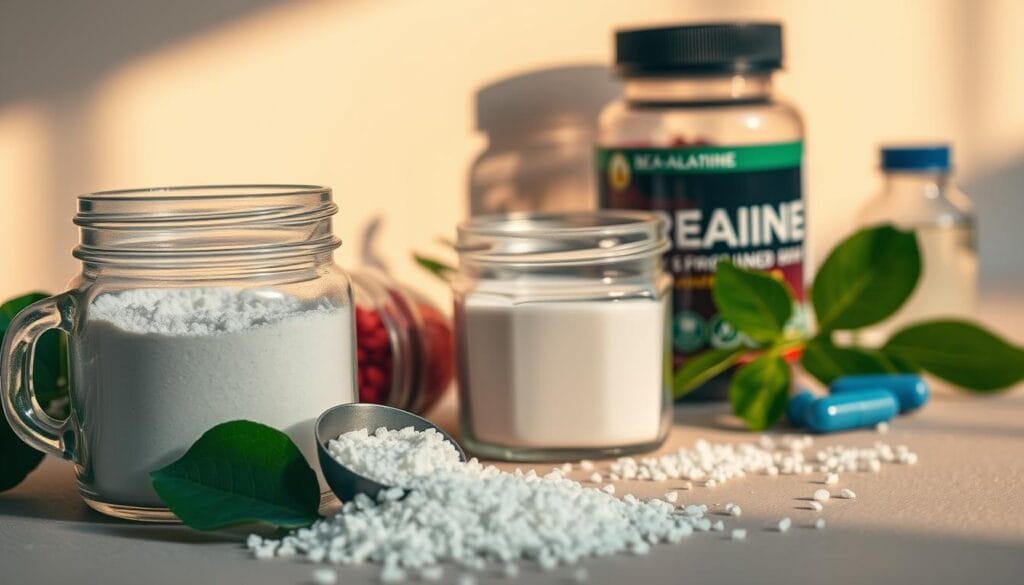
Ingredients that move the needle: caffeine, citrulline, beta-alanine, creatine
When you scan a label, look first for clinically effective doses of caffeine, citrulline, beta‑alanine, and creatine.
Caffeine drives alertness and focus. Most adults tolerate up to 400 mg/day, so match a serving to your daily intake and other sources like coffee.
Citru lline (often 6–8 g) supports nitric oxide and blood flow for fuller pumps and better endurance. Transparent Labs BULK and several leaders hit this range.
Beta‑alanine buffers fatigue. Aim for ~3.2–6 g daily; tingles are normal and benefits build over weeks.
Creatine monohydrate is effective at 3–5 g daily. It does not have to live in a single serving; many lifters take it separately for simplicity and consistent dosing.
Label transparency matters—avoid proprietary blends that hide doses. For product examples and dosing math, see our ingredient deep dives and the strongest pre-workout guide.
Taste and flavors that win: blue raspberry, fruit punch, and more
Flavor choices can make or break your daily ritual; some lines nail candy-like blue raspberry while others favor subtler fruit punch blends.
What to expect: Transparent Labs BULK and Legion Pulse lean into classic Blue Raspberry and Fruit Punch options. Nitrosurge offers seasonal variety across 10+ flavors, while Optimum Nutrition’s gold standard pre-workout keeps familiar retail favorites easy to find.
Sweetener systems shape aftertaste. Natural sweeteners often feel cleaner but can add bitterness when per serving ingredient loads are high. Sucralose masks harsh notes, while stevia can leave a green note for sensitive users.
Mixability matters. Some high-dose formulas foam or clump at full serving; others mix smooth in a shaker. Swolverine Non-Stim’s Mango Lemonade is a standout for flavor and mixability.
- Balance price and flavor if you will use one tub for months.
- Higher caffeine can sharpen bitterness; stim-free options feel smoother for evening use.
“Pick two flavors from our flavor matrix, test travel-size or sample sizes, then commit to the one that keeps you consistent.”
| Flavor | Mixability | Best fit |
|---|---|---|
| Blue Raspberry | High | Daily use |
| Fruit Punch | Medium | Flavor variety |
| Mango Lemonade | Excellent | Evening, stim-free |
Third-party testing and banned substances: NSF, Informed Choice, Labdoor
Batch verification and independent seals matter most when you compete or are subject to drug testing.
Why certification matters for athletes in the United States: Certified products reduce the chance of contamination and label errors that can cause positive tests for banned substances. You get documented batch-level results instead of marketing claims.
How the seals differ and what to check
NSF Certified for Sport and Informed Sport focus on banned substances and lot testing. Informed Choice and Informed Sport share similar athlete protections. Labdoor evaluates label accuracy and ingredient assays.
- Verify batch numbers and download the certificate of analysis before meets.
- Expect a small uplift in per serving cost for certified lines—this buys documented testing.
- If you train year-round, stick to certified options to avoid inadvertent positives.
| Certification | Example brand | Why it helps |
|---|---|---|
| Labdoor | Legion Pulse | Label accuracy testing |
| NSF Certified for Sport | Kaged Sport | Lot testing for banned substances |
| Informed Sport | Kaged Elite | Athlete-safe batch verification |
| Informed Choice / COA | Transparent Labs BULK, Optimum Nutrition Gold Standard | Independent certificates of analysis |
Practical tip: If you currently use a non-certified product, transition to a certified equivalent in the same flavor or serving to keep routine and monitor caffeine across other sources. See our certification explainer, certified products list, and athlete-safety pillar to learn how to verify COAs and plan serving timing during competition season.
“Certification doesn’t guarantee performance, but it does lower risk for tested athletes and gives you a traceable testing chain.”
How to take pre-workout for your fitness goals
Plan your serving like a small experiment: time, dose, and context shape whether a scoop helps or hinders a session.
Timing matters: take pre workout about 30–60 minutes before your session so caffeine and flow-enhancing ingredients can kick in. For heavy lifts, err toward 45–60 minutes to let focus and pumps peak before maximal sets.
Adjust the serving by session type. For endurance work, favor lower stimulant doses, extra electrolytes, and steady energy sources. For shorter, high-intensity sessions, prioritize citrulline for blood flow and focus ingredients to support peak effort.
Beginners should start with a half serving. Note heart rate, focus, and perceived exertion over three sessions before increasing to a full serving. If you stack with coffee, tally total caffeine to stay under 400 mg/day.
Creatine timing is flexible; consistency matters more than exact timing. If you prefer it separate from your tub, take 3–5 g daily alongside your routine.
Late sessions and sleep: use stim-free pumps in the evening or cut serving size to protect sleep. In hot-weather runs, pick an electrolyte-forward product and hydrate earlier rather than adding more stimulant.
Use our dosing guide, caffeine timing article, endurance vs strength hub, and ingredient calculators to match serving size, timing, and ingredients to your current block.
| Goal | Timing | Serving focus | Practical tip |
|---|---|---|---|
| Endurance | 30–45 min | Electrolytes, steady caffeine | Hydrate early; favor lower stimulant |
| High-intensity / sprints | 30–45 min | Citrulline, moderate caffeine | Half serving on test days |
| Strength / maximal lifts | 45–60 min | Pumps, focus blends | Time earlier for warm-up sets |
| Late-evening sessions | 30–60 min (use stim-free) | Non-stim pumps, hydration | Protect sleep; avoid extra caffeine |
“Treat each serving as a testing tool: adjust timing and amount to match your fitness goals and training block.”
Side effects and safety: like caffeine jitters, beta-alanine tingles, and sleep
Know what to expect so a single serving helps performance without derailing your day.
Caffeine jitters and dose limits. Jitters rise when a serving nears 300–360 mg, especially if you also drink coffee. The FDA notes ~400 mg/day is safe for most adults, but stacking sources can push you past that quickly. If you feel anxious or shaky, split a full serving into two smaller doses or drop to a half serving to keep performance while reducing side effects.
Beta‑alanine tingles. Pins-and-needles sensations are common at ~3.2–4 g and are harmless for most people. They signal the ingredient is active. To minimize tingles, start with half servings, build tolerance over days, or spread your daily beta‑alanine across multiple servings.

Timing and sleep. Late dosing can harm sleep quality. If you train in the evening, choose a stim-free product or use a lower serving so recovery and next‑day workouts aren’t compromised.
- Taste and sweetness can affect stomach comfort—use extra water if you get GI upset.
- Trial half servings if you are caffeine-sensitive or weigh under ~60 kg.
- Consider products with L-theanine to smooth stimulant effects.
- Rotate low‑stim or non‑stim formulas during deloads or long endurance blocks to limit accumulated fatigue.
Certified products and athlete safety. If you are in-season or cutting weight, favor certified lines to reduce banned‑substance risk and unexpected reactions.
“Consult your healthcare provider or a registered dietitian before starting a new product if you have medical conditions or take medications.”
For deeper reading, see our caffeine sensitivity guide, beta‑alanine explainer, and sleep hygiene for lifters. If symptoms persist, follow medical advice — review this medical disclaimer and contact a registered dietitian or physician.
2025 Black Friday and Cyber Monday deals to watch
If you want to lower long-term cost per serving, target bundle discounts and subscribe-and-save combos during the holiday window.
What to expect from top brands: Transparent Labs has historically offered up to ~25% off. Legion ran BOGO and sitewide promotions that equated to as much as 75% off select SKUs. Kaged often posts 25–30% off with codes like BLACKOUT. Swolverine has done 50% storewide and BOGO events. Optimum Nutrition sees steep retailer discounts on classic tubs.
How to stack coupons, subscribe & save, and bundles
Stack coupon codes with subscribe-and-save when allowed to drop your final price further. Bundles that add electrolytes or creatine can lower your overall cost per serving when the bundle discount beats single-tub savings.
Shortlist two flavors you like. Flavor and tub size sell out fast during lightning deals, and you don’t want to end up with a taste you avoid.
Practical checklist before checkout
- Confirm stim vs non-stim so you don’t buy the wrong caffeine variant in a rush.
- Use our price-per-serving calculator to compare final price across sizes and discounts.
- Prefer certified lines if you compete — discounted athlete-safe options pop up and are worth stocking.
- Check shipping thresholds, return windows, and expiration dates on third-party marketplaces.
“Plan your cart, bookmark our live Black Friday deals hub, and refresh hourly — the best per-serving discounts move fast.”
| Brand | Typical Holiday Promo | Why it matters |
|---|---|---|
| Transparent Labs | Up to ~25% off | Good for hitting strong ingredient doses at lower price |
| Legion | BOGO / deep sitewide | Best for stocking stim and non-stim variants |
| Kaged | 25–30% off (codes) | NSF/Informed Sport certified buys at discount |
| Swolverine / Optimum Nutrition | 50% / retailer discounts | Flavor variety and retail availability |
Final tip: If your workouts ramp in January, buy in November to lock in value and avoid early-year price spikes.
Price per serving benchmarks in 2025: what’s fair and what’s inflated
Price per serving tells you more than the sticker—it reveals how dosing, certification, and tub size change real value.
2025 market average sits near $1.50 per serving. That score is a midrange benchmark where formulation and testing earn a 3/5 value. TL BULK at ~$1.67 and Kaged Sport at ~$1.25 sit close to that line. Legion Pulse runs higher (~$2.25–$2.50) because of clinical doses and testing.
Budget leaders halve monthly spend. Nutricost Pre‑X ($0.83–$0.92) and Nitrosurge ($0.45–$1.02) cut cost, especially with 60‑serving tubs or subscribe-and-save. Optimum Nutrition’s gold standard pricing often lands in the “fair” zone after retailer discounts.
- Consider caffeine and ingredients per serving when you compare true value.
- Pay more for certified lines if you compete or want batch-level assurance.
- Use seasonal deals and our value/price benchmark explainer to time buys.
| Tier | Per serving | Why it costs more |
|---|---|---|
| Budget | $0.45–$0.95 | Basic dosing, larger tubs, fewer tests |
| Mid | $1.00–$1.75 | Balanced doses, occasional certification |
| Premium | $2.00–$2.75+ | Clinical ingredients, third‑party testing |
Quick rule: calculate monthly cost by training days and servings, then use our budget roundup, deal pages, and product comparison tables to decide if the premium delta is worth it for your goals.
Interlink your research: pillar and cluster reads to compare more products
Use our research hub to move fast from ingredient science to real product choices.
Start with the ingredient pillars for caffeine, citrulline, beta-alanine, and creatine to learn dosing ranges, side effects, and brand examples. Those pages make label checks simple and save you time when tallying per serving math.
Deep dives, testing standards, and brand reviews
We surface the testing standards explainer so you can prioritize NSF, Informed Sport, and Labdoor evidence when safety matters. Then jump to brand-by-brand reviews for Transparent Labs, Legion, Kaged, Optimum Nutrition, Jacked Factory, Swolverine, and Nutricost.
- One-click access to ingredient hubs for dosing and safety.
- Certification guide and COA walkthrough to verify batches.
- Brand reviews showing flavors, mixability, and per serving data.
- Goal-based lists — muscle, endurance, beginners, athletes — to match your fitness and nutrition plan.
Tools and tables: use our label-reading guide, cost calculators, and side‑by‑side tables to model monthly spend and serving rotations across training phases.
“Follow the pillars, use the calculators, and build a shortlist that matches your goals before you buy.”
Who should skip pre-workout—and when to talk to a registered dietitian
If you have health concerns, pause before trying a stimulant formula. Certain situations make a pre workout unsafe or unwise.
Skip stimulant products if you are:
- Pregnant or breastfeeding.
- Managing specific heart conditions or high blood pressure.
- Caffeine-sensitive or taking meds that interact with stimulants.
Talk with a registered dietitian to review labels, ingredients, and the right serving for your needs. Certified lines reduce contamination risk, but certification does not replace medical advice.
“If you notice jitters, sleep loss, or odd reactions, stop use and consult a clinician before reintroducing a lower serving.”
Safer options include stim-free pumps or simple electrolyte mixes on days stimulants are inappropriate. If you react badly, follow an elimination, wait, and reintroduce at half serving while tracking symptoms.
| Concern | Safer option | Talk to |
|---|---|---|
| Caffeine sensitivity | Stim-free pump / electrolytes | Registered dietitian |
| Medication interactions | Avoid stimulant products | Physician + RD |
| Athlete testing | Certified product, conservative dosing | RD / team medic |
Checklist for your RD: total caffeine per day, beta-alanine plans, creatine dosing, other meds, and baseline nutrition (hydration, protein, carbs). Use our medical disclaimer, RD consultation page, and sensitivity guides for next steps and tailored care.
Conclusion
Conclusion
This guide leaves you with a clear roadmap to choose the right pre workout without guessing.
You have the key takeaways: an average benchmark near $1.50 per serving, certified lines (NSF, Informed Choice, Labdoor) for athlete safety, and examples that balance dosing, price, and testing.
Match ingredients like citrulline, beta‑alanine, and creatine to your goals. Keep total caffeine within safe limits and adjust each serving to the session.
Start with our top picks, then refine by flavor, certification, and training block. Use the deal pages, price calculators, and ingredient deep dives to lock in value and optimize performance.
When in doubt: begin at half a serving, track how you feel, and choose certified options if you compete.
FAQ
What should you look for when choosing a pre-workout product?
Look for clear dosing of key ingredients such as caffeine, citrulline, beta-alanine, and creatine monohydrate. Check third‑party testing (NSF, Informed‑Choice, Labdoor) for label accuracy and banned substance screening. Match stimulant level to your tolerance and pick flavors and sweeteners you’ll actually use.
How much caffeine per serving is typical and safe?
Typical servings range from about 150 mg to 400 mg. If you’re sensitive, aim for 100–200 mg or a stim‑free formula. Don’t exceed 400 mg total daily from all sources unless advised by a clinician, and avoid taking high doses close to bedtime to prevent sleep disruption.
Why is citrulline important and what dose works?
Citrulline supports blood flow and pumps by raising nitric oxide. Effective doses usually start at 3–6 grams (as citrulline malate often listed 2:1 or 1:1); many proven formulas use 6–8 grams per serving for better endurance and pump effects.
Should your pre-workout include creatine monohydrate?
Creatine helps strength and muscle gains when taken consistently. Including 3–5 g per serving can be convenient, but it’s fine to take creatine separately. Look for micronized creatine monohydrate and remember you need daily intake for full benefit.
What is beta-alanine for and what side effects should you expect?
Beta‑alanine improves muscular endurance at doses around 2–3 g per serving but often causes harmless tingling (paresthesia). If tingles bother you, split doses or choose lower amounts; long‑term use raises carnosine and performance over weeks.
How many servings per tub should you expect and how does price per serving vary?
Common tub sizes range from 20 to 40 servings. Price per serving depends on ingredient doses and brand positioning; benchmark fair pricing by comparing cost against clinically effective ingredient amounts rather than tub size alone.
Are flavored options like blue raspberry or fruit punch usually artificial?
Many flavors use artificial sweeteners and dyes for intensity, though some brands offer natural sweeteners and no artificial colors. If you prefer clean labels, seek formulas that specify stevia, monk fruit, or natural colors on the label.
Do third-party tests guarantee a product is safe for athletes?
Certifications from NSF or Informed‑Choice greatly reduce the risk of banned substances and confirm label accuracy, but no test can eliminate all risk. Always check the certificate batch number and consult your sport’s rules before using any supplement.
How long before training should you take a serving?
Take your serving 30–60 minutes before exercise for peak caffeine and nitric oxide effects. Adjust timing based on digestion, tolerance, and whether you’re training fasted or after a meal.
Who should avoid stimulants or choose stim‑free options?
If you have high blood pressure, anxiety, sleep issues, or are sensitive to caffeine, choose low‑stim or stim‑free formulas. Pregnant or nursing people and those on certain medications should consult a registered dietitian or physician before using stimulant products.
Can you stack pre-workout with other supplements like BCAAs or electrolytes?
Yes. Add electrolytes or coconut water powder for hydration during long sessions and consider separate creatine or protein to meet goals. Watch total stimulant and amino acid intakes to avoid excessive dosing and unwanted interactions.
How do you judge taste and solubility when buying online?
Read reviews focused on solubility and flavor intensity, and sample single tubs when possible. Brands that list sweetener types and natural flavor sources tend to provide more predictable taste and mixability.
What ingredients offer the best value for performance gains?
Prioritize clinically backed ingredients: caffeine for energy and focus, citrulline for pumps, beta‑alanine for endurance, and creatine for strength. Compare label doses to research‑backed ranges to gauge true value.
Are there differences between stimulant and stim‑free versions of top products?
Stim versions typically add higher caffeine and focus blends (like tyrosine or huperzine), while stim‑free formulas emphasize pumps and endurance (citrulline, betaine) without jitters. Choose based on tolerance and time of day you train.
How should you adjust dosage for endurance versus strength training?
For endurance sessions, prioritize moderate caffeine and electrolytes; for strength, emphasize caffeine, creatine, and higher citrulline for blood flow. Reduce total stimulant dose for longer sessions to avoid crashes and dehydration.